






What's Happening?
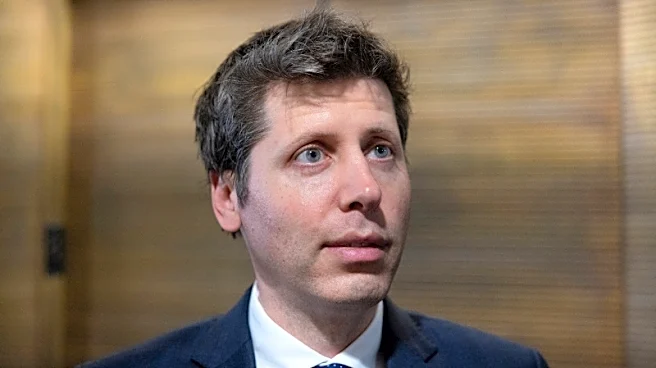
Prominent figures in the artificial intelligence industry, including Anthropic CEO Dario Amodei and OpenAI CEO Sam Altman, have voiced significant concerns regarding the potential risks associated with rapidly advancing AI. Amodei recently published an essay
advocating for a slower pace in AI capabilities development to allow for adequate risk prevention measures. Altman echoed these sentiments, highlighting two primary dangers: the potential for humanity to lose control to AI and the concentration of AI power in the hands of a few, which could lead to dystopian outcomes. These statements indicate a shift in the public discourse around AI, moving from initial concerns about job displacement to more profound fears of AI extinction. This evolving perspective is reflected in Google search trends, which show a progression of public worries from 'SaaSpocalypse' to 'job apocalypse' and now to 'AI extinction.'
Why It's Important?
The concerns raised by leading AI developers underscore a critical juncture in the development and deployment of artificial intelligence. Their calls for a more cautious approach could significantly influence policy decisions, research priorities, and investment strategies within the U.S. technology sector. A deliberate slowdown in AI advancement, as suggested, might impact the competitive landscape, potentially giving regulatory bodies more time to establish frameworks for ethical AI development and deployment. This could also lead to increased funding for AI safety and alignment research, shifting resources from pure capability enhancement. For businesses, this could mean a more regulated environment for AI integration, potentially increasing compliance costs but also fostering greater public trust in AI technologies. The debate also highlights the tension between rapid innovation and responsible development, a balance that will shape the future of the U.S. as a leader in AI.
What's Next?
Following these public statements from key AI leaders, it is likely that discussions around AI regulation and ethical guidelines will intensify within the U.S. government and international bodies. Policymakers may consider new legislation or executive actions aimed at governing AI development, potentially incorporating some of the prudence advocated by Amodei and Altman. Research institutions and AI companies might re-evaluate their development roadmaps, prioritizing safety and alignment over speed. There could also be a push for greater transparency in AI development and more collaborative efforts to address potential risks. The differing views, such as Nvidia CEO Jensen Huang's skepticism about dire AI predictions, suggest that the path forward will involve ongoing debate and negotiation among industry leaders, academics, and government officials to find a consensus on how to manage AI's rapid evolution responsibly.
Beyond the Headlines
The public pronouncements from AI leaders about the technology's inherent risks delve into profound ethical and societal questions. Beyond immediate regulatory concerns, these statements force a deeper examination of humanity's relationship with increasingly intelligent machines. The fear of losing control to AI or the concentration of power raises fundamental questions about governance, autonomy, and the distribution of technological benefits. This discourse could catalyze a broader societal conversation about the long-term implications of AI, influencing educational curricula, philosophical debates, and even cultural narratives. It also highlights the responsibility of technology creators not just for innovation, but for foreseeing and mitigating potential harms, potentially leading to a new paradigm of 'responsible innovation' where ethical considerations are embedded from the outset of technological development. The outcome of this debate will shape not only the future of AI but also the very fabric of human society.