




What's Happening?
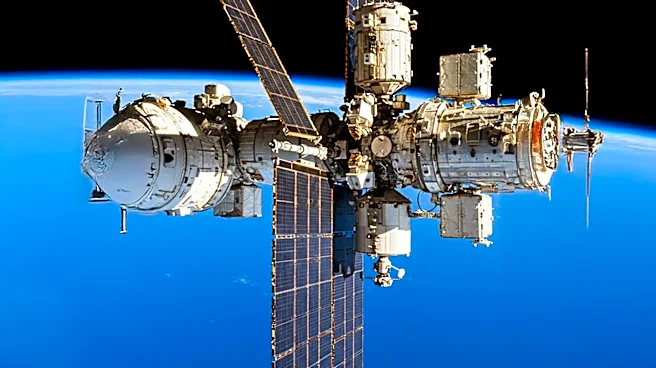
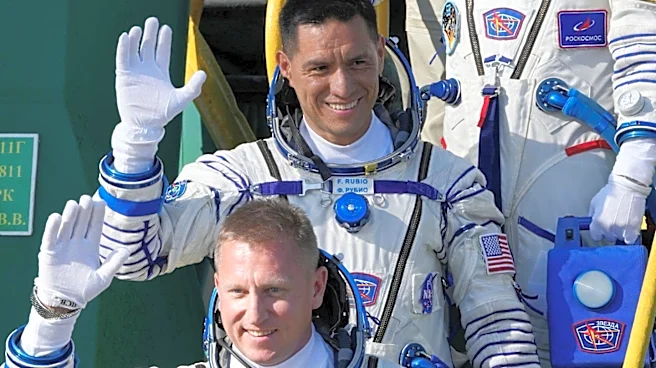
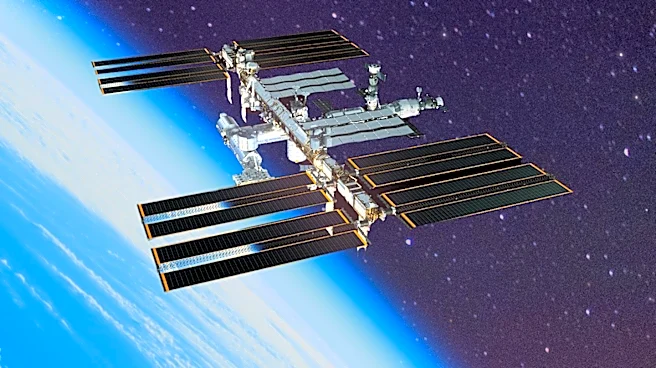
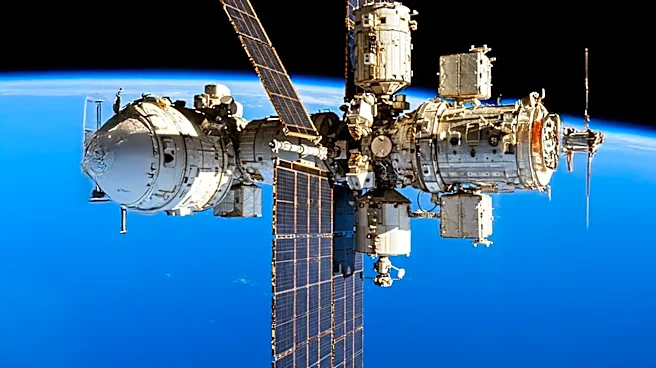
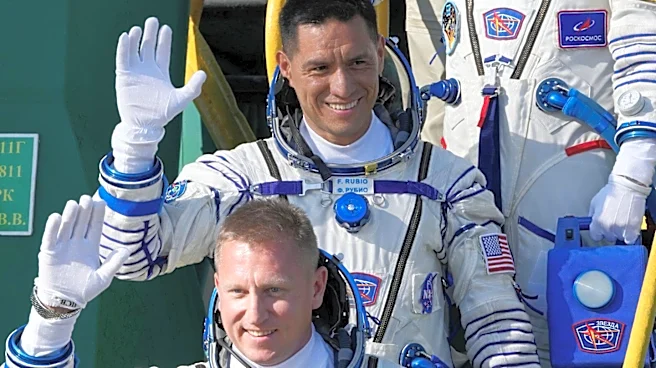
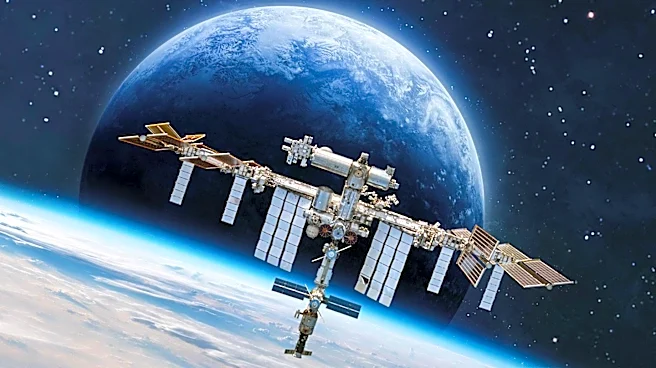
NASA astronaut Chris Williams is set to discuss his recent mission aboard the International Space Station (ISS) during a news conference scheduled for August 4 at NASA's Johnson Space Center in Houston. Williams, who served as a flight engineer for Expeditions
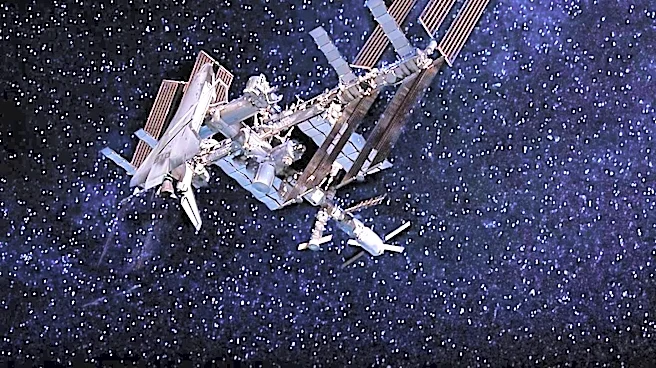
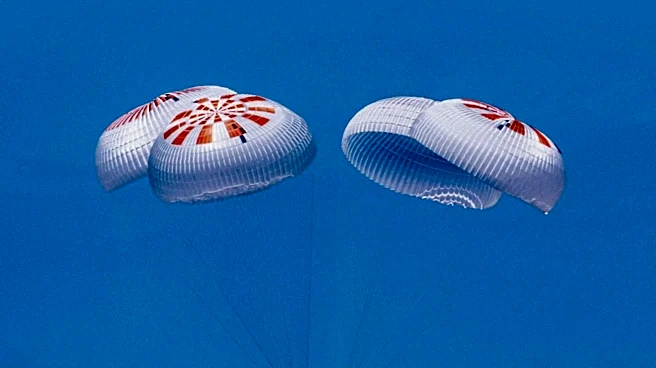
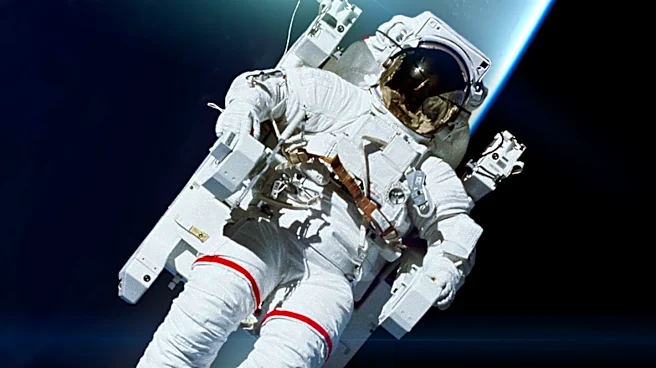
73 and 74, returned to Earth on July 26 after spending 241 days in space. During his mission, he participated in various scientific investigations and technology demonstrations aimed at advancing the commercial space economy and supporting Earth-based industries. His work included semiconductor crystal research, which has potential applications in high-performance computing and electronics. Williams also completed two spacewalks to upgrade the space station's power systems and repair the Canadarm2 robotic arm. The mission saw the arrival of six visiting spacecraft and the departure of eight, covering over 102 million miles in 3,856 orbits around Earth.
Why It's Important?
The mission undertaken by Chris Williams highlights the critical role of the International Space Station in fostering scientific research and technological advancements that have direct applications on Earth. The semiconductor crystal research conducted during his mission could lead to significant improvements in the manufacturing of materials used in high-performance computers and electronics, potentially benefiting various industries. Additionally, the mission's focus on developing new cancer treatments underscores the ISS's contribution to medical research. The successful completion of spacewalks for power system upgrades and robotic arm repairs also demonstrates the ongoing efforts to maintain and enhance the ISS's capabilities, ensuring its continued role in supporting future human missions to the Moon and Mars.
What's Next?
Following the news conference, it is expected that NASA will continue to promote the findings and technological advancements achieved during Williams' mission. The insights gained from the semiconductor research and other experiments could lead to collaborations with commercial partners interested in leveraging these technologies for Earth-based applications. Furthermore, the successful completion of the mission's objectives may influence future planning and prioritization of scientific research aboard the ISS, as well as preparations for upcoming lunar and Martian missions. Stakeholders in the aerospace and technology sectors will likely monitor these developments closely to identify potential opportunities for innovation and collaboration.