
What's Happening?
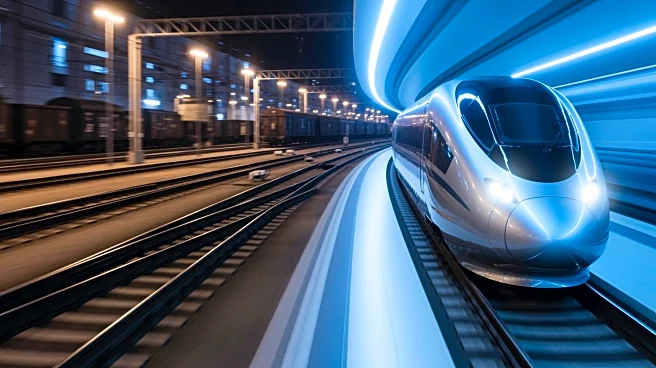
China's high-speed rail sector is making significant advancements with the deployment of the Ruixue Yingchun Fuxing electric multiple unit train, which operates at nearly 200 mph and features self-driving
capabilities. This train, which was used during the 2022 Beijing Olympics, showcases advanced technology such as automatic restroom lighting, energy-saving air conditioning, and a smart monitoring system. In contrast, the U.S. rail system relies heavily on diesel engines, with electric rail accounting for less than 1% of tracks. This disparity is largely due to the U.S. system's reliance on private businesses for rail upgrades, as opposed to government-funded initiatives seen in other countries.
Why It's Important?
The advancements in China's rail technology underscore the potential benefits of high-speed, electric rail systems, including reduced travel times and lower environmental impact. The U.S. lag in adopting electric rail technology could have significant implications for its transportation infrastructure, economic competitiveness, and environmental goals. The reliance on diesel engines not only affects the efficiency of the rail system but also contributes to higher pollution levels. As global trends move towards sustainable transportation solutions, the U.S. may face increased pressure to modernize its rail infrastructure to remain competitive and meet environmental standards.
What's Next?
The U.S. may need to reconsider its approach to rail transportation, potentially increasing investment in electric rail infrastructure to catch up with global advancements. This could involve policy changes to encourage private investment in electric rail or increased government funding for rail upgrades. The potential for high-speed rail to transform U.S. transportation could lead to discussions among policymakers, industry leaders, and environmental groups about the future of rail in the country.
Beyond the Headlines
The shift towards electric rail in other countries highlights broader trends in sustainable transportation and the role of government investment in infrastructure development. The U.S. may need to address regulatory and financial barriers that have hindered the adoption of electric rail. Additionally, the cultural and economic impacts of transitioning to a more modern rail system could influence public opinion and policy decisions in the coming years.