



What's Happening?
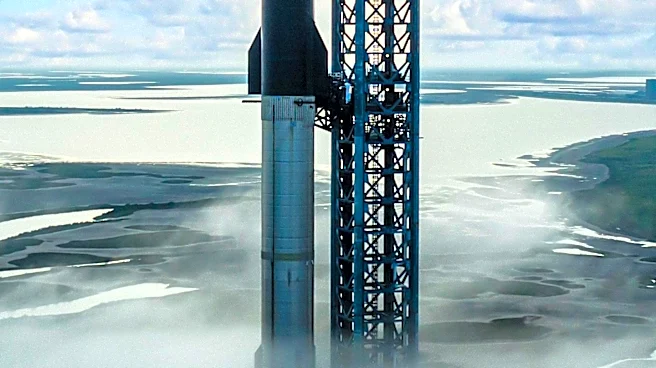
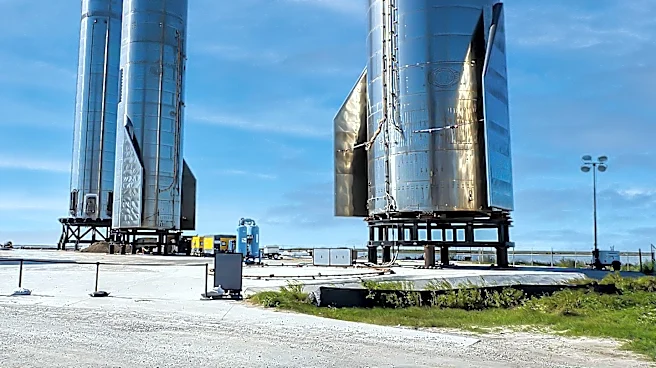
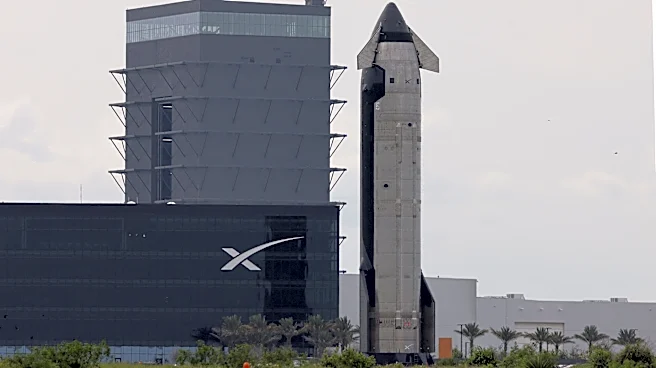
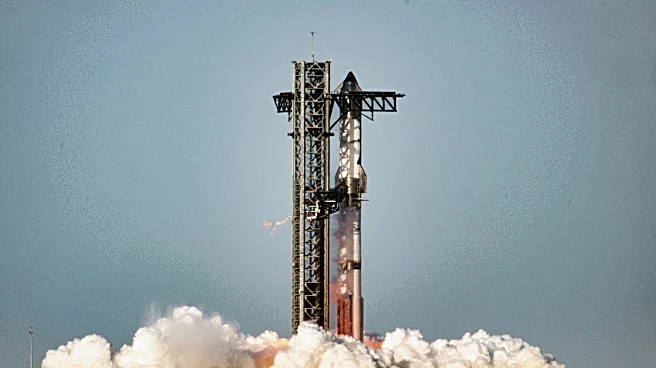
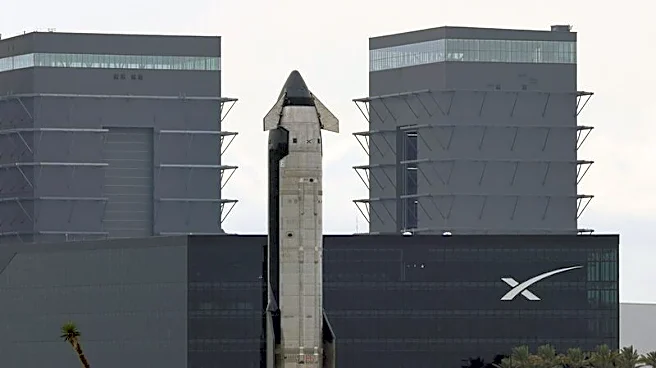
SpaceX successfully recovered the upper stage of its Starship rocket on November 14, 2026, following an orbital flight. This marks the first time in history that an upper stage has safely returned to the ground after reaching orbit. The recovery involved
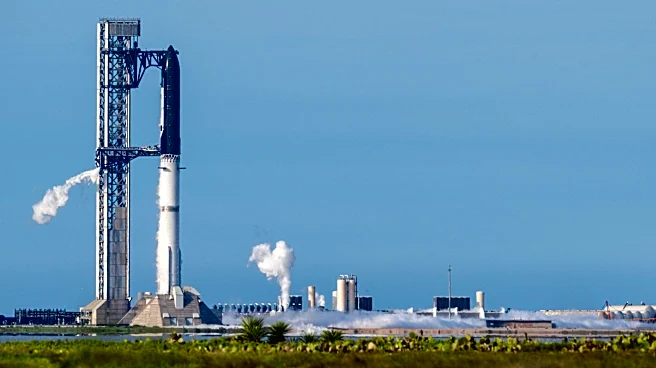
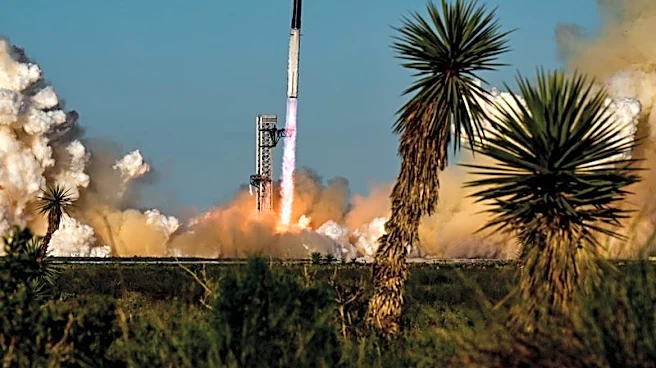
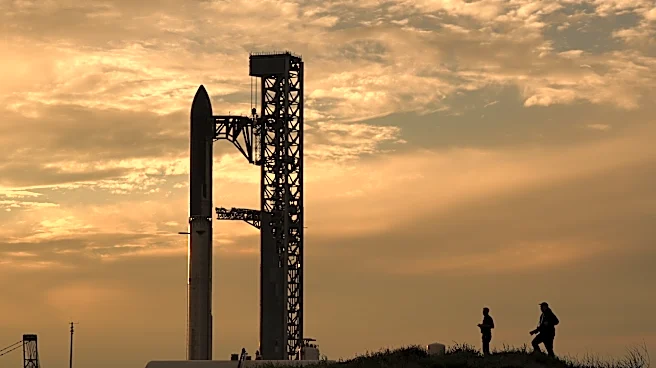
the Starship, known as Ship 42, being caught mid-air by the launch tower's mechanical arms, a system Elon Musk previously referred to as 'robot chopsticks.' The spacecraft completed approximately 14 orbits over 22.5 hours before its return to SpaceX's Starbase site in Texas. While the upper stage recovery was successful, the Super Heavy booster, which was also intended to be caught, was diverted and exploded in the Gulf of Mexico after its guidance system determined it was not aligned for a tower catch. This flight, Flight 15, also deployed 26 Starlink V3 satellites, significantly increasing downlink capacity.
Why It's Important?
This successful recovery of Starship's upper stage represents a significant milestone in aerospace engineering and the pursuit of fully reusable rockets. The ability to recover and reuse the upper stage, which faces extreme thermal loads and high velocities during re-entry, dramatically reduces mission costs and accelerates the viability of rapid-turnaround deep-space transport systems. This achievement is crucial for SpaceX's long-term goals, including the deployment of its Starlink satellite constellation and future lunar missions like NASA's Artemis IV, slated for 2028. The reusability of Starship is expected to make launches far cheaper, enabling more frequent and cost-effective access to space. The incident with the booster, however, highlights the ongoing challenges in perfecting full reusability for both stages.
What's Next?
SpaceX plans to fly the recovered Ship 42 again, aiming for reliable Starship reuse by NASA's Artemis IV moon mission in 2028. The company will continue to refine its recovery methods for both the upper stage and the Super Heavy booster, with the next test flight scheduled for December 8. Engineers will investigate the booster's failure to ensure future attempts are successful. The market's reaction to the successful upper stage catch and the booster loss will be observed, especially with a batch of insider shares from the IPO lockup becoming available for sale. SpaceX's transition to Starship is also critical for its own Starlink satellites and new AI-powered compute platforms, and the company will need to certify Starship for national security missions, a process expected to take several years.
Beyond the Headlines
The successful recovery of Starship's upper stage has profound implications beyond immediate mission costs and reusability. It signifies a major step towards making space travel more accessible and sustainable, potentially democratizing access to orbit and deep space. This technological leap could accelerate scientific research, resource utilization in space, and the establishment of lunar bases or even Mars colonization. The 'robot chopsticks' method, initially met with skepticism, demonstrates an innovative approach to complex engineering challenges. However, the loss of the booster underscores the inherent risks and complexities of pushing the boundaries of space technology, highlighting the continuous need for rigorous testing and development in the pursuit of ambitious space exploration goals.