


What's Happening?
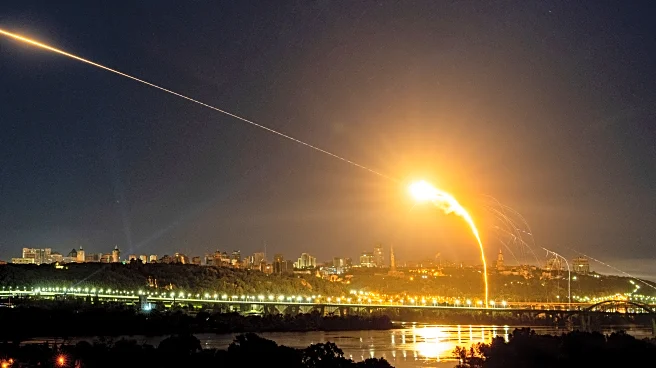
Recent developments in the ongoing conflict involving Iran have underscored the increasing role of digital warfare. A sophisticated cyber operation attributed to Iran involved sending spyware-laden texts to Israelis during a missile strike, demonstrating
a novel integration of digital and physical attacks. This operation is part of a broader cyber conflict involving the U.S. and Israel against Iran and its proxies. The cyberattacks, while high in volume, have generally been low in impact, targeting U.S. and Israeli companies, as well as other regional networks. These attacks often exploit outdated security systems, causing psychological and resource strains on affected organizations. Notably, Iran has targeted critical infrastructure, including healthcare and data centers, with both cyber and conventional attacks, emphasizing the strategic importance of these sectors.
Why It's Important?
The integration of cyber tactics in warfare represents a significant shift in military strategy, highlighting the vulnerabilities of critical infrastructure and the potential for widespread disruption. For the U.S., this underscores the need for robust cybersecurity measures across industries, particularly those linked to national security and public welfare. The attacks serve as a reminder of the evolving nature of threats, where digital capabilities can be leveraged to compensate for conventional military disadvantages. This has implications for U.S. policy and defense strategies, necessitating increased investment in cybersecurity and the development of countermeasures to protect against such threats. The psychological impact of these attacks also poses challenges, as they aim to undermine confidence and morale.
What's Next?
As the conflict persists, it is likely that cyberattacks will continue to be a key component of Iran's strategy. The U.S. and its allies may need to enhance their cybersecurity frameworks and collaborate on intelligence sharing to mitigate these threats. Additionally, there may be increased focus on developing technologies to detect and counteract disinformation campaigns, which have been amplified by artificial intelligence. The establishment of the U.S. State Department's Bureau of Emerging Threats reflects a proactive approach to addressing these challenges, but ongoing vigilance and adaptation will be crucial as cyber capabilities continue to evolve.
Beyond the Headlines
The use of artificial intelligence in both offensive and defensive cyber operations highlights the dual-edged nature of technological advancements. While AI can enhance the efficiency of cyberattacks, it also offers tools for defense, such as automating threat detection and response. However, the proliferation of disinformation, facilitated by AI, poses a significant threat to public trust and information integrity. This raises ethical and regulatory questions about the use of AI in warfare and the responsibilities of state and non-state actors in managing these technologies.