







What's Happening?
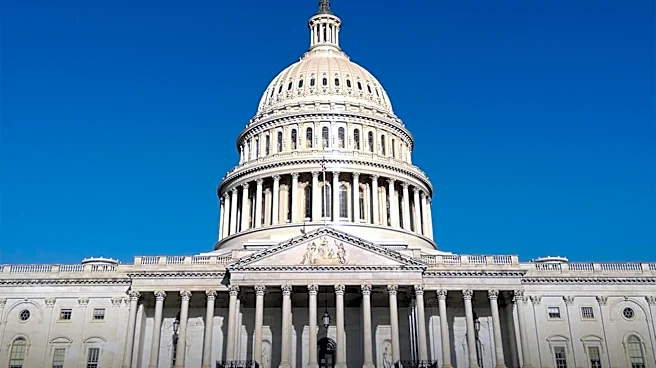
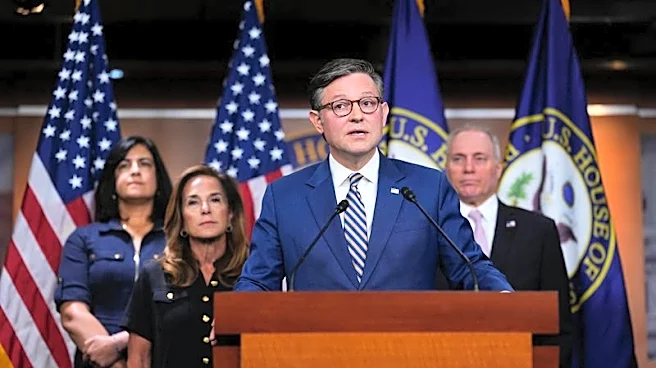
The U.S. House of Representatives has voted 220 to 205 to extend government funding at existing levels through December 4, aiming to prevent a government shutdown just before the midterm elections. The vote saw six Democrats join Republicans in advancing
the bill. The decision comes amid tensions over President Trump's election overhaul bill, the SAVE America Act, which has been a point of contention among lawmakers. Democratic leaders have criticized the funding extension for not addressing issues such as funding for immigration enforcement. The bill now moves to the Senate, where it will require bipartisan support to pass.
Why It's Important?
The extension of government funding is crucial to avoid a shutdown that could disrupt government operations and services, particularly during an election year. The decision reflects ongoing political divisions in Congress, with debates over immigration policy and election reforms at the forefront. A government shutdown could have significant economic and social impacts, affecting federal employees, contractors, and services relied upon by the public. The outcome of this funding decision will also influence political dynamics leading up to the midterm elections, as both parties seek to position themselves on key issues such as immigration and fiscal responsibility.
What's Next?
The Senate will need to consider the funding extension, requiring Democratic support to meet the 60-vote threshold. If an agreement is not reached, Republicans may resort to the reconciliation process to pass the bill on a party-line basis. The potential for a government shutdown remains if a consensus is not achieved. Political leaders and stakeholders will continue to negotiate, with the possibility of further legislative maneuvers to address contentious issues such as immigration policy. The outcome will be closely watched as it could set the tone for future legislative priorities and political strategies.