





What's Happening?
Missouri Republican leaders are attempting to repeal voter-approved abortion rights by introducing a new ballot initiative, Amendment 3, which combines abortion restrictions with a constitutional ban on gender transition care for minors. This move comes
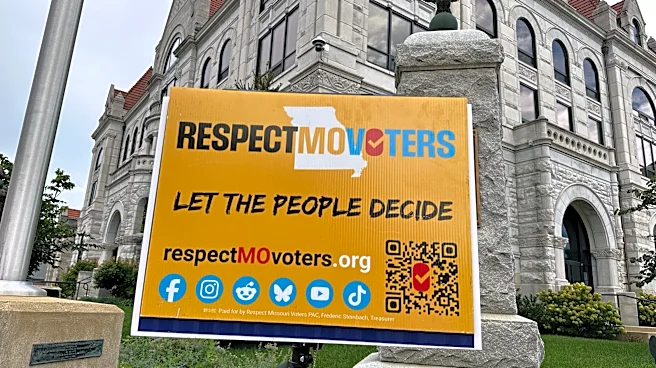
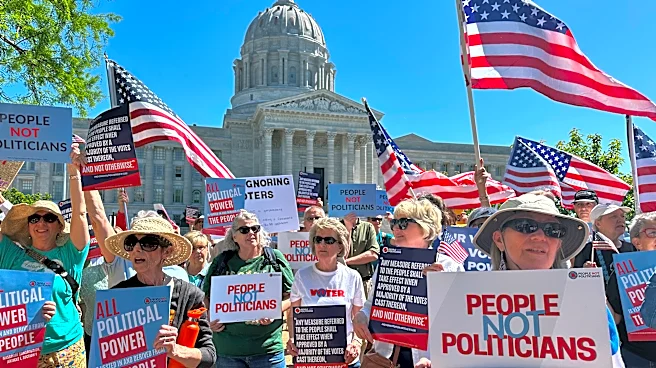
after voters in 2024 approved a previous Amendment 3 that enshrined reproductive rights, overturning a near-total abortion ban. The new Amendment 3 seeks to restore an abortion ban with limited exceptions for rape, incest, medical emergencies, and fetal anomalies, while also constitutionally prohibiting gender transition care for minors, despite existing state laws already banning such surgeries and new prescriptions of puberty blockers and hormones for minors until August 2027. Critics argue that the inclusion of gender care restrictions is a tactic to make an unpopular abortion ban more palatable to voters, as polling suggests stronger opposition to gender transition care for minors than to abortion access. The ballot summary for the new Amendment 3 has faced legal challenges, with courts ordering revisions to clarify its impact on previously approved abortion rights.
Why It's Important?
This development is significant as it highlights a recurring pattern in Missouri politics where Republican-controlled legislative bodies attempt to circumvent voter-approved initiatives. The bundling of abortion rights repeal with restrictions on gender transition care for minors represents a strategic effort to leverage public sentiment on one issue to achieve legislative goals on another. This approach could set a precedent for how controversial social issues are presented to voters in other states, potentially leading to more complex and multi-faceted ballot initiatives. The outcome of this vote will directly impact healthcare access for millions in Missouri, particularly women seeking abortion services and a smaller, but vulnerable, population of transgender minors. It also underscores the ongoing tension between direct democracy through ballot initiatives and legislative power, with implications for the balance of power within state governance and the protection of individual rights.
What's Next?
The new Amendment 3 will be on the November ballot, and its fate will be decided by Missouri voters. Advocacy groups supporting abortion rights, such as the coalition 'Stop the Ban,' are actively campaigning to inform the public about the amendment's implications and persuade voters to reject it. Conversely, the 'Her Health, Her Future' political action committee, supported by Missouri first lady Claudia Kehoe, is promoting the amendment, emphasizing the protection of children from gender transition procedures. Legal challenges regarding the ballot language have already occurred, and further legal scrutiny or public debate over the interpretation and implementation of the amendment's provisions are likely, regardless of the outcome. The results of this vote could influence future legislative strategies in Missouri and potentially serve as a model or cautionary tale for other states grappling with similar social and political divides.
Beyond the Headlines
The strategy employed by Missouri Republicans to link abortion rights with gender transition care for minors raises deeper questions about political messaging, voter manipulation, and the ethical implications of legislative tactics. By combining two distinct, albeit emotionally charged, issues, proponents aim to create a broader appeal for their agenda, potentially obscuring the full impact of each provision. This approach can be seen as an attempt to bypass direct public support for abortion rights by associating them with a less popular issue. Furthermore, the repeated attempts by the state legislature to overturn voter-approved measures highlight a potential erosion of democratic principles, where the will of the people, expressed through ballot initiatives, is continuously challenged by elected officials. This ongoing struggle reflects a broader national debate about the role of government in personal healthcare decisions and the rights of marginalized communities, with Missouri serving as a critical battleground.