
What's Happening?
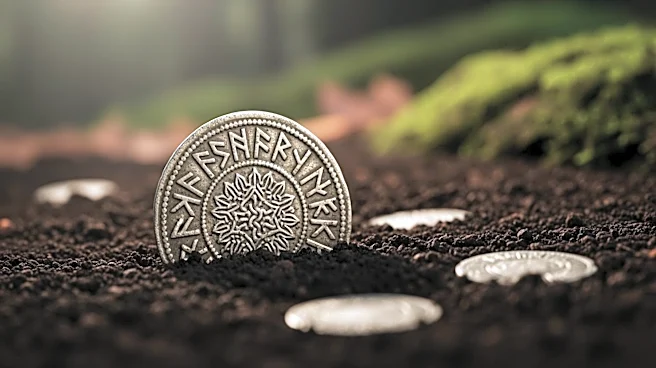
Two hobbyists using metal detectors have uncovered Norway's largest known collection of Viking Age coins near the village of Rena. Initially finding 19 silver coins, their discovery prompted a full archaeological
investigation, leading to the recovery of over 3,150 coins. The coins, primarily from England and Germany, with some from Denmark and Norway, date back to the late 900s and early 1000s. This period was marked by the reigns of notable figures such as Cnut the Great and Ethelred II of England, Otto III of Rome, and Norway's Harald Hardrada. The find highlights a time when foreign currency was prevalent in Norway's economy. The discovery has been described as a 'historic find' by Norway's climate and environment minister, and a once-in-a-career event by county archaeologist May-Tove Smiseth.
Why It's Important?
This discovery is significant as it provides valuable insights into the economic and cultural exchanges during the Viking Age. The presence of foreign coins in Norway suggests extensive trade networks and interactions with other European regions. Such findings can enhance understanding of the Viking economy and its integration with broader European markets. For historians and archaeologists, this trove offers a tangible connection to the past, potentially leading to new interpretations of Viking society and its global interactions. The discovery also underscores the role of amateur archaeologists in contributing to historical knowledge, highlighting the potential for significant finds outside professional excavations.