






What's Happening?
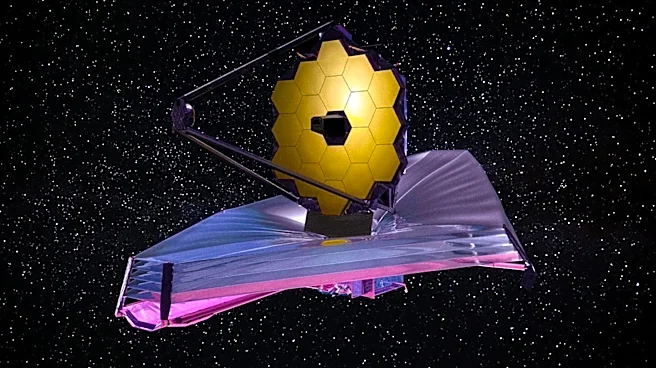
NASA's James Webb Space Telescope, utilizing its Mid-Infrared Instrument (MIRI), has captured detailed images of the galaxy Centaurus A, revealing its dusty structures and hidden activities. Located 11 million light-years from Earth, Centaurus A is an active
galaxy, making it a valuable subject for studying the growth and evolution of galaxies and black holes. The images provide a clearer understanding of the galaxy's complex structure, which is not typically visible in nearby galaxies. This discovery is part of NASA's ongoing efforts to explore the universe and advance scientific knowledge.
Why It's Important?
The findings from the James Webb Space Telescope are significant as they enhance our understanding of galaxy formation and the interaction between galaxies and black holes. This research could lead to breakthroughs in astrophysics, offering insights into the fundamental processes that govern the universe. The ability to observe such detailed structures in Centaurus A also demonstrates the advanced capabilities of the James Webb Space Telescope, reinforcing its role as a critical tool for future astronomical discoveries.