





What's Happening?
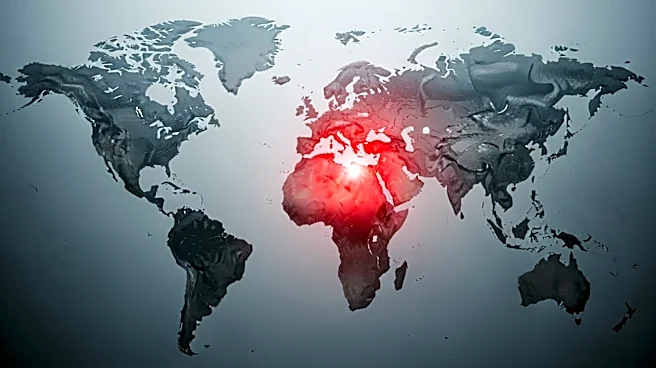
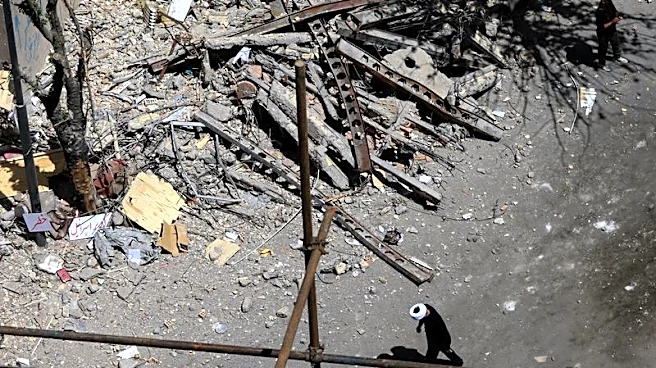
The International Monetary Fund (IMF) has issued a warning about the global financial stability risks posed by the ongoing conflict in the Middle East. The conflict has led to increased inflationary pressures, causing global equity prices to decline by 8%
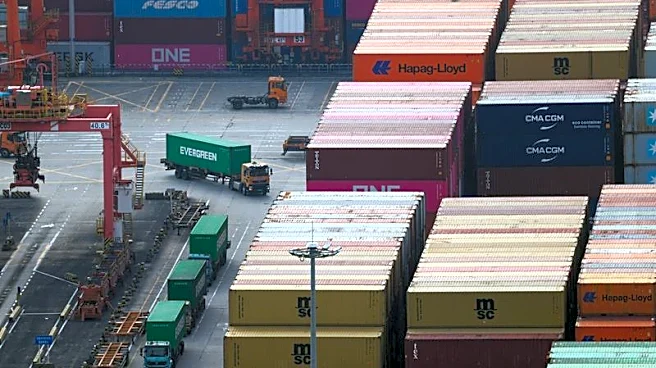
and sovereign bond yields to rise sharply. The closure of the Strait of Hormuz by Iran has resulted in a spike in oil prices, further exacerbating financial instability. The IMF's Global Financial Stability Report highlights the potential for funding markets to tighten, which could strain non-banks, private credit, and borrowers in the artificial intelligence sector.
Why It's Important?
The conflict in the Middle East is creating significant economic challenges, with rising energy prices and inflation expectations impacting global markets. The increased volatility in bond markets and the greater issuance of short-term securities are contributing to financial instability. The IMF warns that prolonged conflict could lead to a tightening of global financial conditions, potentially triggering forced selling by nonbanks and other leveraged investors. This situation poses a risk to financial stability, with potential consequences for economic growth and investment, particularly in sectors like artificial intelligence.
What's Next?
Policymakers are urged to prepare for potential market dysfunction by establishing liquidity and funding facilities. The IMF recommends focusing on price stability and monitoring inflation expectations closely. On the fiscal side, governments should aim to stabilize public debt and prioritize spending on vulnerable groups affected by inflation shocks. The ongoing conflict in the Middle East is likely to continue influencing global financial markets, requiring coordinated policy responses to mitigate risks and support economic stability.