





What's Happening?
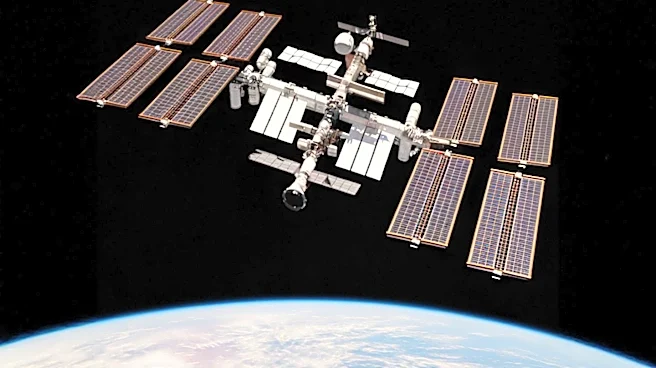
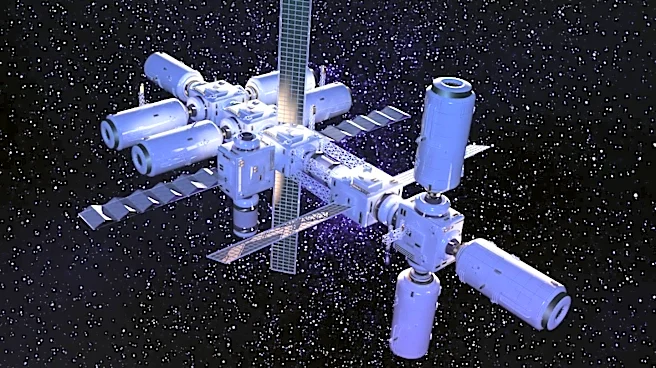
NASA has released a draft Request for Proposals (RFP) for industry partners to design, build, and operate a commercial space station in low Earth orbit (LEO) to succeed the International Space Station (ISS). The draft, issued on July 6, outlines plans
for a Commercial LEO Destination (CLD) that will support a crewed flight test by 2029. NASA intends to award firm-fixed-price, multi-award, indefinite-delivery/indefinite-quantity contracts for the development, certification, and services of the CLD. The agency plans to select two or more contractors for early development, with a competitive task order for final design, testing, and certification. An industry briefing is scheduled for July 9, with feedback on the draft due by July 27. The final RFP is expected in late August, with proposals due 60 days later and a contract award anticipated in spring 2027.
Why It's Important?
The transition from the ISS to a commercial space station marks a significant shift in NASA's approach to space exploration and utilization. By involving private industry in the development and operation of a new space station, NASA aims to foster innovation and reduce costs. This move could open up new opportunities for commercial activities in space, including research, manufacturing, and tourism. The success of this initiative could also strengthen the U.S. position in the global space industry, encouraging further investment and collaboration. The involvement of private companies in space station operations may lead to more efficient and cost-effective solutions, benefiting both NASA and the broader space community.
What's Next?
Following the industry briefing and feedback period, NASA will finalize the RFP and begin the selection process for contractors. The chosen companies will be responsible for designing, building, and operating the CLD, with NASA providing support and expertise through a Government Collaboration Agreement. The transition to a commercial space station will require careful coordination and planning to ensure continuity of operations and research currently conducted on the ISS. As the project progresses, stakeholders, including government agencies, private companies, and international partners, will need to collaborate closely to address technical, logistical, and regulatory challenges.