




What's Happening?
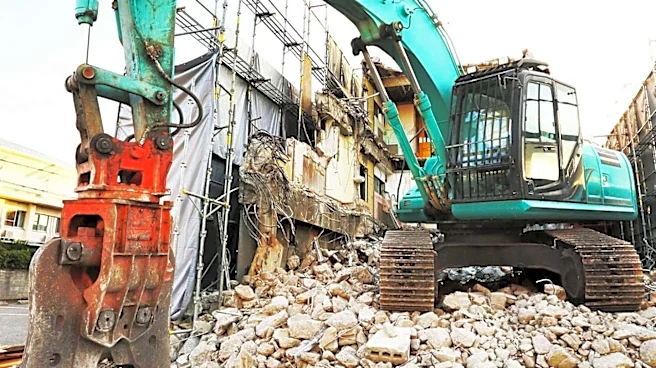
The 99-year-old Harper School building in Houston, a significant landmark in the city's Black history, has been largely demolished. Construction crews began tearing down the structure on Center Street, near Washington and Studemont, less than a year after
the HISD's state-appointed Board of Managers voted to sell the abandoned property to BKR Memorial IV, a limited liability company. The building, constructed in 1927, was a key part of Chaneyville, a thriving Black industrial neighborhood in the late 19th and early 20th centuries. Houston Mayor John Whitmire had previously stated his intention to preserve the property after a fire in late July, calling it an "important piece of Houston's Black history." However, a demolition permit was filed shortly after, and despite protests from community members, including former students, the demolition proceeded. About half of the facade remained standing, but the lettering spelling "Harper School" was no longer visible.
Why It's Important?
The demolition of the Harper School building represents a significant loss of historical and cultural heritage for Houston's Black community and the city as a whole. The school was named after Frances Ellen Watkins Harper, a prominent Black poet, author, and advocate for abolition and women's suffrage. Its destruction erases a tangible link to a vital period of Black history in Houston, particularly the Chaneyville neighborhood. This event highlights the ongoing challenges in preserving historical sites, especially those connected to marginalized communities, against urban development and property sales. The loss of such a landmark can diminish collective memory and understanding of the past, impacting educational opportunities and community identity. It also raises questions about the effectiveness of preservation efforts and the balance between historical conservation and economic development in rapidly growing urban areas.
What's Next?
With the Harper School building largely demolished, the focus will likely shift to the future of the property and potential efforts to commemorate its historical significance. Community activists, such as Candi Cardona, who organized protests, have expressed a desire for the property to be protected as green space if the structure cannot be saved. There may be discussions about erecting historical markers or creating memorials to honor the legacy of the Harper School and Frances Ellen Watkins Harper. The HISD and the new property owner, BKR Memorial IV, may face continued scrutiny regarding their decisions and future plans for the site. This event could also galvanize broader efforts within Houston to identify and protect other historical sites, particularly those representing underrepresented communities, to prevent similar losses in the future.
Beyond the Headlines
The demolition of the Harper School building underscores a deeper societal issue concerning the preservation of Black historical sites in the U.S. Often, these sites are undervalued or overlooked in urban planning and development, leading to their destruction. This trend contributes to the erasure of Black narratives and experiences from the physical landscape, making it harder for future generations to connect with their heritage. The incident in Houston reflects a broader struggle between economic interests and cultural preservation, where the economic value of land often outweighs the historical and social value of existing structures. It also highlights the power dynamics involved in urban development, where community voices and historical significance can be overridden by institutional decisions. This event serves as a poignant reminder of the ongoing need for robust preservation policies and community engagement to protect the tangible remnants of diverse histories.