

What's Happening?
Artists in New York City who have long used MetroCards as a medium for their artwork are facing the end of an era as the Metropolitan Transportation Authority (MTA) phases out the iconic blue-and-plastic cards. The MetroCard, which has been a staple of New York City transit
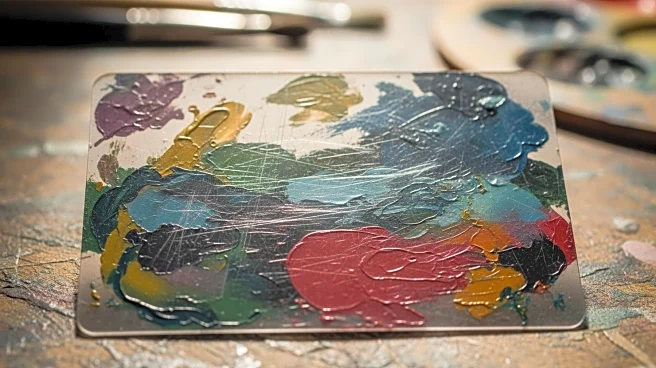
since the 1990s, is being replaced by the contactless OMNY system. Artists like Thomas McKean and Nina Boesch have been using these cards to create intricate collages and sculptures, turning what many see as mere transit passes into pieces of art. McKean, who has been crafting art from MetroCards for over two decades, expressed a sense of loss and nostalgia as the cards are removed from circulation. Similarly, Boesch, who has amassed a collection of around 90,000 MetroCards, views the cards as iconic pieces of New York's cultural landscape. Both artists have used the cards to create works that resonate with New Yorkers and tourists alike, capturing the spirit of the city through this unique medium.
Why It's Important?
The transition from MetroCards to the OMNY system marks a significant shift in New York City's transit history, impacting not only daily commuters but also the artistic community that has found inspiration in these cards. For artists like McKean and Boesch, the MetroCard is more than just a piece of plastic; it is a symbol of New York's identity and a medium that has allowed them to connect with a broad audience. The phasing out of MetroCards could lead to increased demand and value for existing artworks made from these cards, as they become rarer over time. This change also highlights the broader trend of digital transformation in public services, which, while offering convenience, may lead to the loss of tangible cultural artifacts that hold sentimental value for many.
What's Next?
As the MetroCard becomes a relic of the past, artists like McKean and Boesch will need to adapt to the changing landscape. McKean, who has a stockpile of a few thousand cards, anticipates that his supply will last for several more years, but he is preparing for the day when he will no longer have enough to complete his collages. Boesch, with her extensive collection, is less concerned about running out in the near future but acknowledges that the scarcity of MetroCards could drive up the cost of her artworks. The transition to the OMNY system may also inspire new forms of artistic expression, as artists explore alternative materials and mediums to capture the essence of New York City.
Beyond the Headlines
The end of the MetroCard era raises questions about the preservation of cultural heritage in the face of technological advancement. While the OMNY system offers a more efficient and modern approach to transit, it lacks the tangible and iconic nature of the MetroCard, which has become a symbol of New York City life. This shift reflects a broader cultural movement towards digitalization, which, while beneficial in many ways, can lead to the erosion of physical artifacts that hold historical and emotional significance. Artists and cultural historians may need to find new ways to document and preserve the legacy of the MetroCard and its impact on New York City's cultural landscape.