



What's Happening?
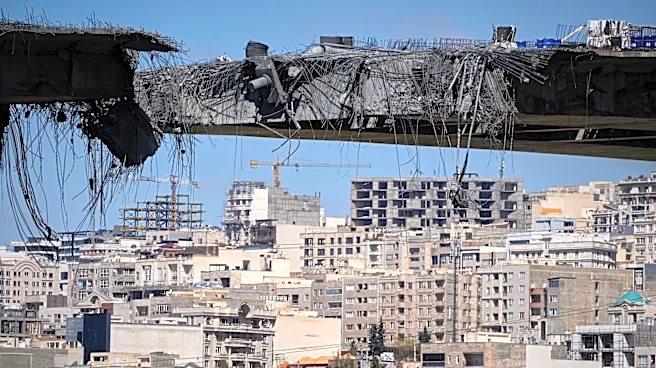
The Pasteur Institute of Iran, a century-old medical facility in Tehran, has been severely damaged amid US and Israeli military actions. The World Health Organization (WHO) reported that the institute, crucial for public health services, is now unable
to function. Established in 1920, the institute has been pivotal in producing vaccines and serums for diseases like smallpox and cholera. The attack is part of a broader pattern of assaults on Iran's healthcare infrastructure, with at least 20 incidents verified by the WHO since March 1. The destruction of the institute has sparked criticism, highlighting its role in Iran's healthcare system and its historical significance.
Why It's Important?
The destruction of the Pasteur Institute represents a significant blow to Iran's healthcare capabilities, particularly in the production of essential vaccines and serums. This event could exacerbate public health challenges in Iran, affecting disease control and prevention efforts. The attack also raises concerns about the targeting of healthcare facilities in conflict zones, which can have dire humanitarian consequences. The incident may further strain US-Iran relations and impact diplomatic efforts in the region. Additionally, the loss of such a historic institution underscores the cultural and historical dimensions of military conflicts, where the destruction of heritage sites can have lasting impacts on national identity and history.