







What's Happening?
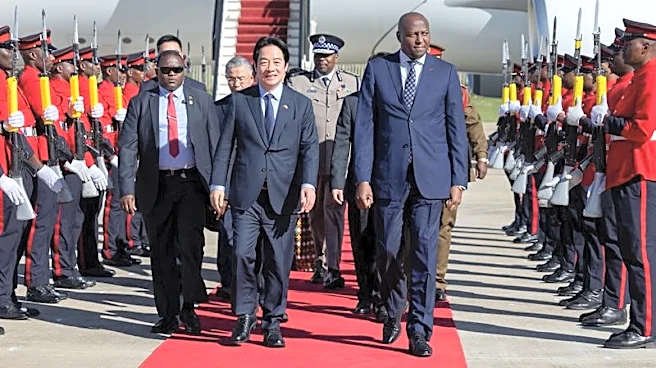
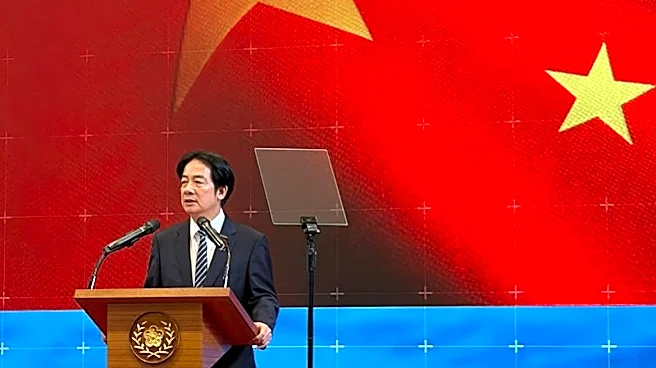
China has issued a strong rebuke against Taiwan's President Lai Ching-te, likening him to a 'rat crossing the street' following his unannounced visit to Eswatini. This visit is seen by Beijing as a challenge to the one-China principle. Lai's trip was
initially postponed due to revoked overflight permits, attributed to Chinese pressure. Despite this, Lai proceeded with the visit using an Eswatini government aircraft. Eswatini remains one of the few countries maintaining formal diplomatic ties with Taiwan. China's Taiwan Affairs Office criticized Lai for prioritizing the visit over domestic concerns, such as a recent earthquake in Taiwan.
Why It's Important?
This incident underscores the fragile nature of Taiwan's international relations and the persistent pressure from China to limit Taiwan's diplomatic engagements. China's aggressive stance reflects its broader strategy to assert control over Taiwan, which it considers a part of its territory. The U.S. has historically supported Taiwan, and this situation could influence U.S.-China relations, particularly in the context of Taiwan's strategic importance in the Indo-Pacific region. The diplomatic tensions highlight the challenges Taiwan faces in maintaining its sovereignty and international presence.
What's Next?
Taiwan is likely to continue its efforts to engage with the international community, despite Chinese opposition. The U.S. and other allies may increase diplomatic support for Taiwan, potentially leading to further tensions with China. The situation could also prompt discussions within international organizations about Taiwan's participation and recognition. Lai's response indicates Taiwan's determination to resist external pressures and maintain its global interactions.