



What's Happening?
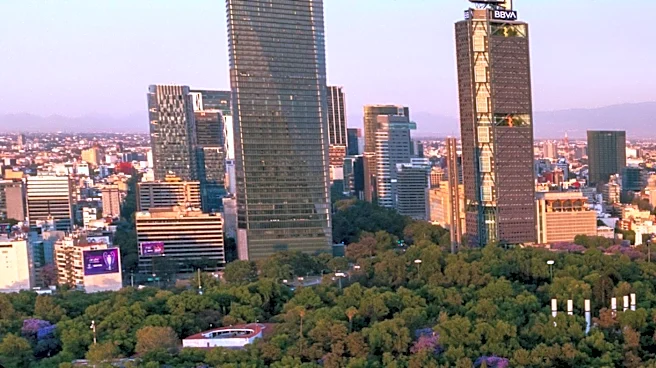
Mexico City is experiencing significant land subsidence, with localized areas sinking at approximately 217mm per year, equivalent to the length of a toothbrush annually. The city's median sinking rate is 8mm per year. This phenomenon, known as land subsidence, involves
the gradual compression or collapse of the ground beneath urban areas. While various factors contribute to this, including building, mining, tectonic shifts, earthquakes, and natural soil consolidation, the primary cause is groundwater extraction. As cities expand and demand for freshwater increases, more water is drawn from underground, leading to soil compression and subsequent sinking. A recent study published in Nature Cities, utilizing high-resolution satellite data over nine years, identified Mexico City as one of the global hotspots for severe subsidence. This study, conducted by Shengli Tao, Xie Hu, and colleagues, measured land movement across 465 cities in 107 countries, highlighting the urgency of the issue.
Why It's Important?
The rapid sinking of Mexico City poses severe threats to both its human population and diverse ecosystems. Infrastructure, including buildings, foundations, drainage systems, and sewage networks, is vulnerable to damage, leading to costly repairs and potential structural failures. Furthermore, land subsidence significantly increases the city's susceptibility to flooding, exacerbating risks for communities. Beyond human impact, Mexico City's rich urban wildlife, comprising over 2,200 species, is also in danger. This includes the critically endangered axolotl, endemic to Lake Xochimilco, and numerous species of urban-adapted hummingbirds and migratory birds. The combination of sinking land and the potential for increased flooding could devastate these delicate ecosystems, leading to habitat loss and further endangering vulnerable species. The findings underscore the need for policymakers to prioritize actions that mitigate subsidence-related hazards and protect both urban development and biodiversity.
What's Next?
The identification of subsidence hotspots by researchers like Shengli Tao and Xie Hu aims to assist policymakers in prioritizing interventions to reduce subsidence-related hazards. Continued monitoring of land movement is crucial to determine if current trends persist and to inform targeted responses. This will likely involve implementing more sustainable water management practices to reduce reliance on groundwater extraction, exploring alternative water sources, and potentially investing in infrastructure designed to withstand or mitigate the effects of subsidence. Additionally, efforts to protect and restore the habitats of endangered species, such as the axolotl, will become increasingly vital as the city continues to sink. The ongoing research provides a baseline for future studies, emphasizing the need for a comprehensive and sustained approach to address this complex environmental challenge.
Beyond the Headlines
The issue of land subsidence in Mexico City highlights a broader global challenge faced by many urban centers, particularly those with high population densities and significant reliance on groundwater. This phenomenon underscores the intricate relationship between urban development, resource management, and environmental sustainability. The ethical implications extend to ensuring equitable access to water resources while safeguarding the long-term stability of the land. Culturally, the loss of historical structures and traditional ways of life due to sinking could have profound impacts on the city's identity. The long-term shifts triggered by this development could include a re-evaluation of urban planning strategies, a greater emphasis on green infrastructure, and the development of innovative engineering solutions to adapt to a changing landscape. This situation serves as a stark reminder of the need for integrated approaches that consider both human needs and ecological well-being in urban environments.