




What's Happening?
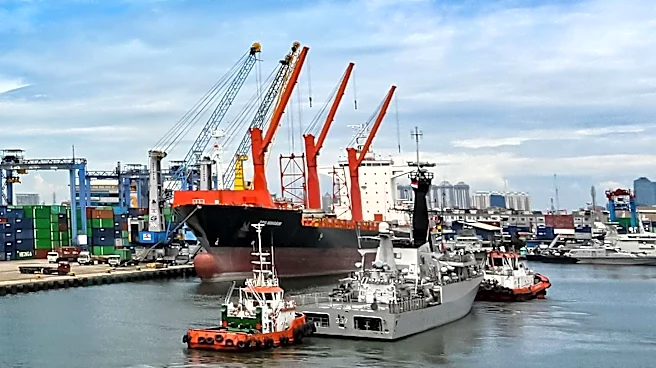
Guam, a critical U.S. territory in the Pacific, is facing significant logistical challenges that could impact its role in potential military conflicts in the Indo-Pacific region. The Port of Guam, the island's only deep-water port, handles the majority
of the island's imports and is crucial for both civilian and military operations. However, its current capacity is insufficient to meet the demands of large-scale military mobilization. Historical comparisons, such as the Gulf War and Operation Iraqi Freedom, highlight the vast logistical requirements that far exceed Guam's current capabilities. The port's infrastructure, including its berthing and storage facilities, is outdated and inadequate for supporting extensive military operations. Additionally, the island's strategic location makes it vulnerable to potential attacks, further complicating its logistical role.
Why It's Important?
The logistical limitations of Guam are significant given its strategic importance to U.S. military operations in the Indo-Pacific. As tensions in the region rise, particularly with China's growing influence, the ability to efficiently mobilize and sustain military forces is crucial. Guam's current infrastructure shortfalls could hinder the U.S. military's ability to project power and respond to regional threats. The island's vulnerability to missile and drone attacks further exacerbates these challenges, potentially disrupting supply chains and military readiness. Addressing these issues is vital for maintaining U.S. strategic interests and ensuring the security of allied nations in the region.
What's Next?
To address these challenges, significant investments in Guam's port infrastructure are necessary. Plans to expand the port to accommodate larger vessels and increase storage capacity are underway, but these efforts require substantial financial and logistical support. Enhancing cybersecurity measures is also critical, given the potential for cyber threats to disrupt operations. The U.S. Department of Defense must prioritize these upgrades to ensure Guam can fulfill its role as a key logistical hub. Additionally, collaboration with regional allies and partners will be essential to bolster collective defense capabilities and mitigate the risks posed by potential adversaries.
Beyond the Headlines
The situation in Guam underscores broader issues related to U.S. military logistics and infrastructure readiness. The reliance on a single port for critical operations highlights the need for diversified logistical networks and resilient supply chains. Furthermore, the geopolitical dynamics in the Indo-Pacific region necessitate a reevaluation of U.S. military strategy and resource allocation. Strengthening Guam's capabilities could serve as a model for enhancing other strategic locations, ensuring the U.S. remains prepared for future conflicts and maintains its influence in the region.