




What's Happening?
UN food and migration agencies are issuing urgent warnings that the onset of winter could reverse fragile gains in food security within Gaza. Currently, 1.4 million people face acute hunger, and nearly 2 million require shelter assistance. Recent heavy
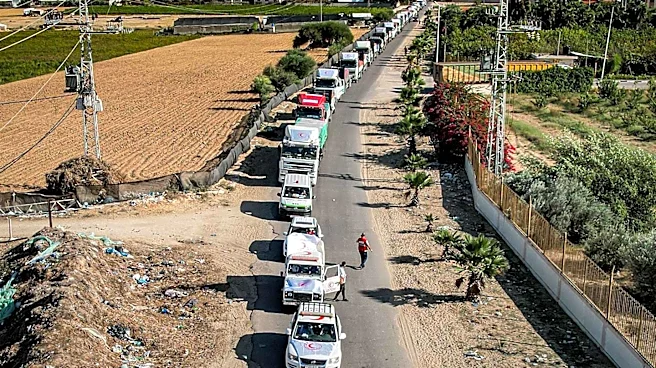
rains have already caused significant damage, with tens of thousands of shelters destroyed or damaged, leading to at least five deaths from a collapsed sand bank and two children dying in fires while attempting to stay warm. The World Food Programme (WFP) reports that it has reduced hot meal provisions from daily to every two days in displacement camps due to funding shortfalls. Humanitarian operations are further hampered by Israeli restrictions on aid deliveries, including strict criteria for essential items like tent poles, and a heavily bureaucratic clearance process for equipment. These factors, combined with over 80% unemployment and limited access to farming and fishing, mean that without sustained humanitarian assistance, a deeper food security crisis is imminent.
Why It's Important?
The deteriorating situation in Gaza carries significant humanitarian implications, highlighting the vulnerability of a population already displaced and facing severe resource scarcity. The warnings from UN agencies underscore the critical need for sustained international aid and improved access for humanitarian supplies. If current trends continue, the region could experience a severe humanitarian catastrophe, marked by widespread famine, disease, and increased mortality rates, particularly among vulnerable populations like women and children. The restrictions on aid and bureaucratic hurdles also raise questions about international humanitarian law and the responsibilities of all parties involved in ensuring civilian protection and access to basic necessities. The potential for a deeper crisis could also destabilize regional security and increase pressure on international bodies to intervene more decisively.
What's Next?
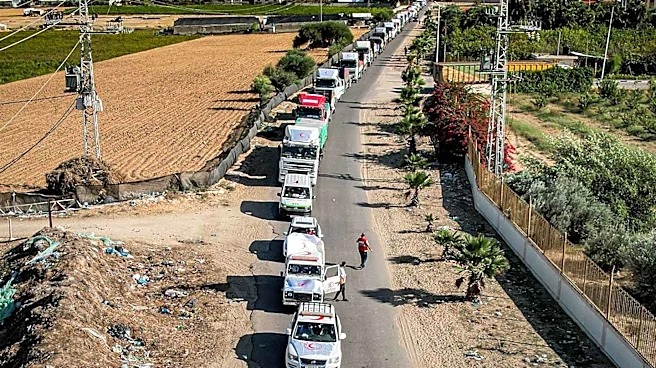
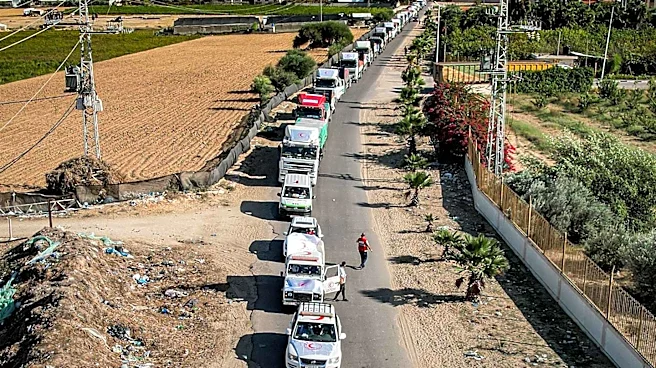
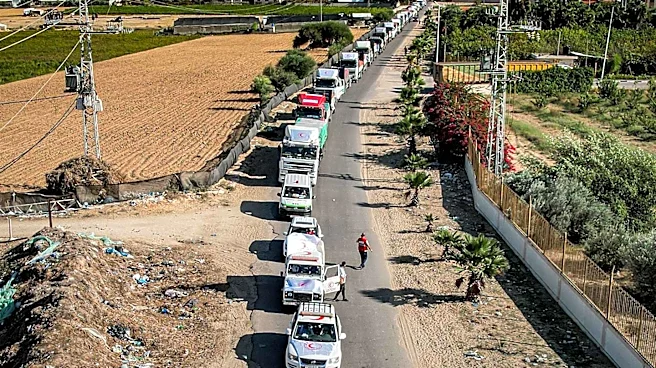
Humanitarian agencies are urgently appealing for increased funding and improved access to Gaza to prevent a further escalation of the crisis. The WFP alone faces a $436 million funding gap for the next six months to provide aid to 2 million people across Palestinian territories. The UN International Organization for Migration (IOM) is calling for $9 million to support flood prevention, fire safety, heating, and emergency site improvements. Efforts are underway to secure the entry of over 100,000 tents from Egypt, but their delivery is contingent on meeting strict Israeli security requirements. International pressure on Israeli authorities to open additional crossing points and streamline the entry of humanitarian supplies will likely intensify. Without these immediate actions, the humanitarian situation is expected to worsen significantly as winter progresses, leading to increased suffering and potential loss of life.
Beyond the Headlines
The ongoing crisis in Gaza extends beyond immediate humanitarian concerns, touching upon deeper issues of long-term displacement, economic viability, and the effectiveness of international aid mechanisms under conflict conditions. The destruction of shelters and food stocks, coupled with restrictions on basic survival means like farming and fishing, points to a systemic breakdown of livelihoods. The high unemployment rate (over 80%) indicates a profound economic collapse, making the population almost entirely dependent on external aid. This dependency, exacerbated by aid restrictions, raises ethical questions about collective responsibility and the right to sustenance in conflict zones. The situation also highlights the challenges faced by humanitarian organizations in navigating complex political and security landscapes, often with limited resources and bureaucratic obstacles, underscoring the need for more robust international frameworks to protect civilian populations during prolonged crises.