
What's Happening?
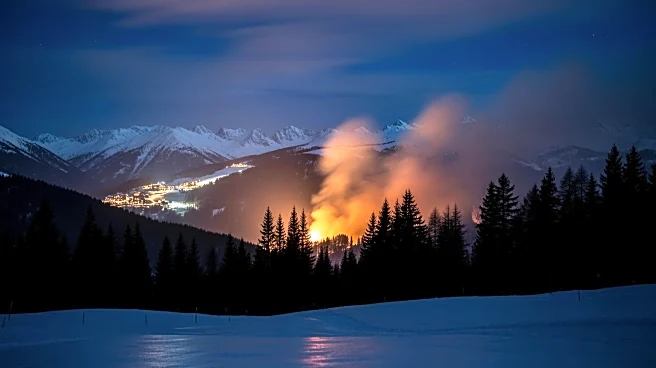
A devastating fire erupted at a bar in a popular Swiss Alps ski resort town on New Year's Eve, resulting in the deaths of approximately 40 individuals and injuring more than 100 others. The incident occurred
in a bustling area frequented by both locals and tourists. According to police reports, the victims include young people from Switzerland and tourists from neighboring countries. The president of the Swiss Confederation, Guy Parmelin, expressed condolences and highlighted the tragic loss of life, emphasizing the presence of many young victims. Emergency services responded to the scene, but the rapid spread of the fire led to significant casualties.
Why It's Important?
The tragic event underscores the critical importance of fire safety measures in public venues, especially in high-traffic tourist areas. The loss of life and the number of injuries highlight potential gaps in safety protocols that need to be addressed to prevent future incidents. This disaster not only affects the local community but also has broader implications for the tourism industry, which relies heavily on the safety and security of its visitors. The incident may prompt a reevaluation of safety standards and emergency response strategies in similar venues worldwide, aiming to enhance protection for both residents and tourists.
What's Next?
In the aftermath of the fire, authorities are likely to conduct a thorough investigation to determine the cause and assess any lapses in safety protocols. This could lead to stricter regulations and enforcement of fire safety standards in public venues, particularly in tourist-heavy areas. The Swiss government and local authorities may also implement measures to support the victims' families and those affected by the tragedy. Additionally, there may be increased scrutiny on similar establishments to ensure compliance with safety regulations, potentially influencing global standards in the hospitality and tourism sectors.
Beyond the Headlines
The incident raises questions about the adequacy of current fire safety measures in public entertainment venues, especially in regions with high tourist influx. It also highlights the need for international cooperation in establishing and maintaining safety standards that protect both local populations and international visitors. The tragedy may serve as a catalyst for broader discussions on public safety, emergency preparedness, and the responsibilities of venue operators in ensuring the well-being of their patrons.