







What's Happening?
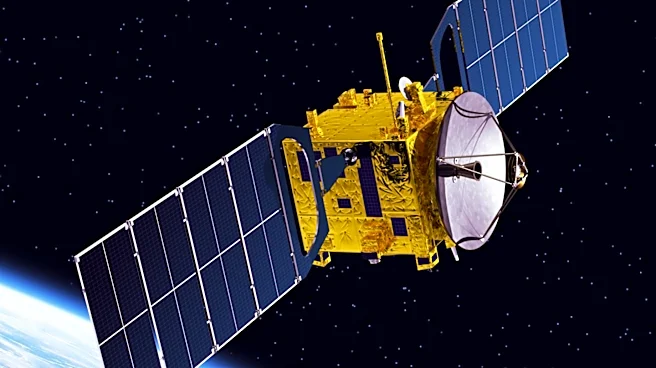
The European Commission and the SpaceRISE consortium have signed an implementation agreement for the IRIS² satellite network, marking its transition from planning to full-scale deployment. The network, designed to provide secure, encrypted connectivity
for governments and emergency services, will consist of 348 satellites, an increase from the originally planned 282. The first launches are scheduled for 2029. This initiative aims to enhance Europe's defense and security capabilities, providing a sovereign alternative to SpaceX's Starlink.
Why It's Important?
The deployment of the IRIS² satellite network is a strategic move by Europe to assert its technological sovereignty and reduce reliance on foreign satellite networks like Starlink. By providing secure communication channels for government and emergency services, IRIS² enhances Europe's ability to respond to crises and maintain national security. The project also represents a significant investment in the European space industry, potentially driving innovation and economic growth. As global competition in satellite technology intensifies, IRIS² positions Europe as a key player in the space sector.
What's Next?
With the implementation agreement in place, the focus will now shift to the construction and deployment of the satellites. The European Commission and its partners will work to ensure the project stays on schedule, with the first launches planned for 2029. As the network becomes operational, it will be crucial to monitor its performance and address any technical challenges that arise. Additionally, the success of IRIS² could pave the way for further investments in European space infrastructure, strengthening the region's position in the global space race.