

What's Happening?
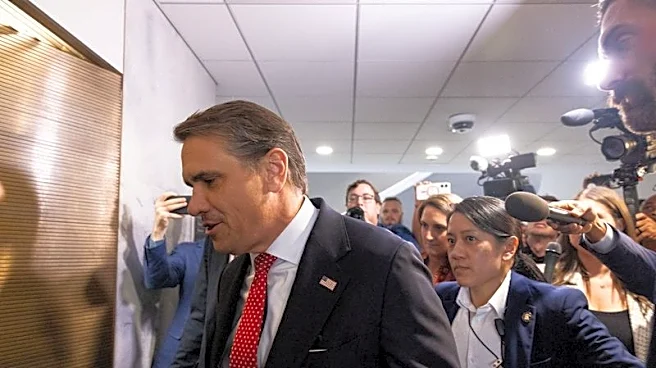
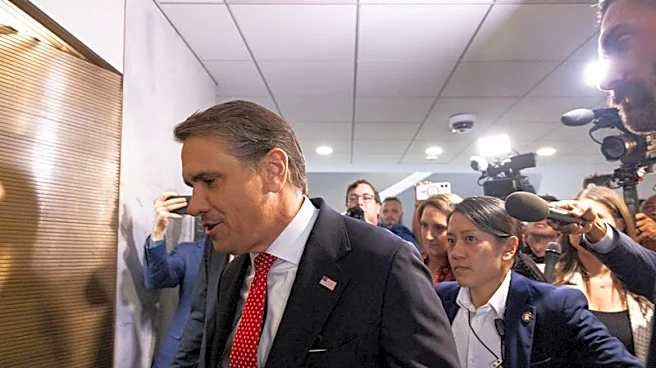
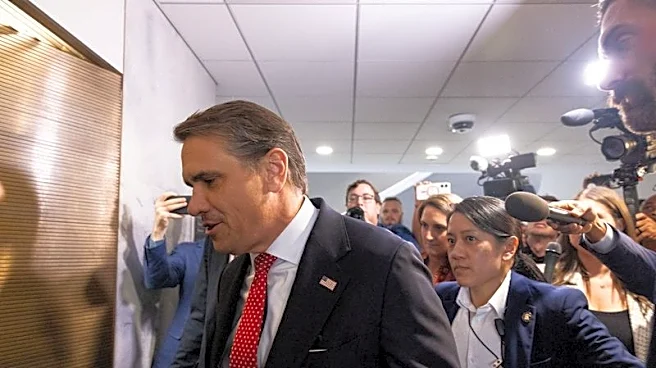
Todd Blanche, President Trump's nominee for attorney general, is facing a challenging confirmation process in the U.S. Senate. Republican Senator Susan Collins has announced her opposition, leaving Blanche with a narrow margin for securing the necessary
votes. With Senate Minority Leader Mitch McConnell absent, Blanche can only afford one more Republican defection. Senators Bill Cassidy and Lisa Murkowski have not disclosed their voting intentions, adding to the uncertainty. Blanche has managed to gain support from some Republican senators by assuring them that certain controversial financial measures will not be pursued. However, questions remain about the implications of these assurances.
Why It's Important?
The confirmation of Blanche is significant as it reflects the broader political dynamics within the Republican Party and the Senate. His nomination is a test of President Trump's influence and the party's cohesion on key appointments. The outcome could affect the administration's ability to implement its legal and policy agenda. Additionally, the financial assurances made by Blanche have raised concerns about potential conflicts of interest and the integrity of the Justice Department's operations. The situation underscores the complexities of political negotiations and the impact of individual senators' decisions on national governance.
What's Next?
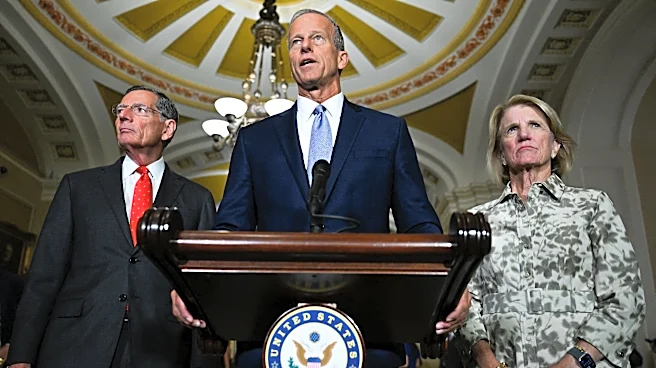
A Senate vote on Blanche's confirmation is expected soon, as Senate Republican Leader John Thune aims to conclude the process before the chamber's recess. The outcome will depend on ongoing negotiations with undecided senators. If confirmed, Blanche will need to navigate the challenges of leading the Justice Department amid scrutiny over his assurances and the administration's legal strategies. The confirmation process may also influence future nominations and the administration's approach to securing Senate support for key positions.