







What's Happening?
Uppsala University is offering a PhD position in experimental nuclear physics, specifically focusing on nuclear fission and gamma-ray emission. The doctoral researcher will join the Division of Applied Nuclear Physics within the Department of Physics and Astronomy,
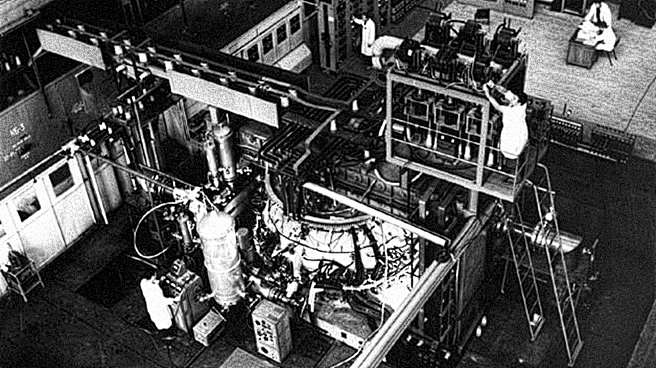
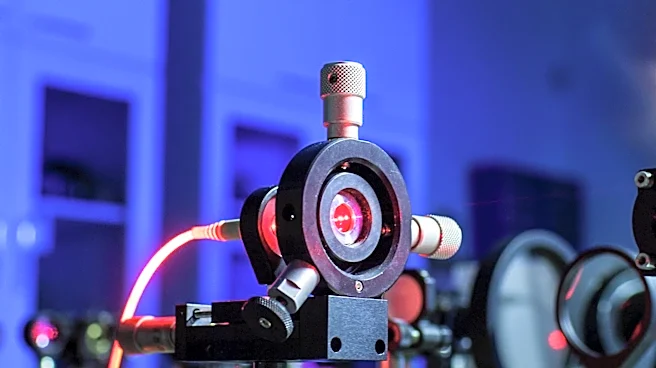
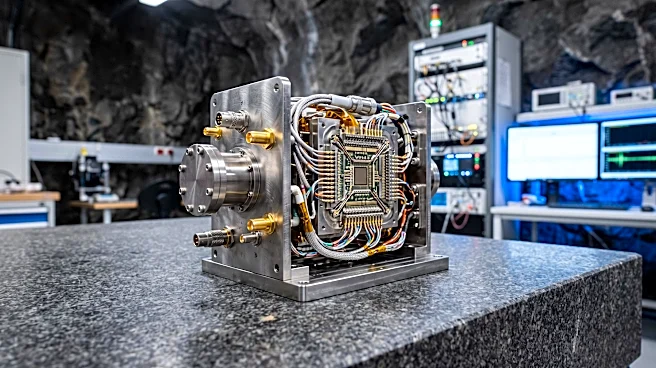
located at the Ångström laboratory. This project is part of an international collaboration with the University of Oslo, operating within the Norwegian Nuclear Research Centre. The research aims to investigate how excitation energy and angular momentum are distributed among fission fragments and subsequently released through gamma-ray emission. The student will conduct measurements of prompt fission gamma-ray spectra, multiplicities, total energies, and related observables, working to extract fission-product yields and isomeric yield ratios. These measurements will utilize the uranium-235(d,pf) surrogate reaction to link observed gamma emission with the excitation energy of the fissioning nucleus. A significant component of the work involves the OSCAR gamma-ray detector array, charged-particle detectors, and a newly developed fission chamber, requiring the student to contribute to detector characterization, calibration, commissioning, optimization, and data analysis.
Why It's Important?
This research is crucial for advancing the understanding of nuclear fission, a fundamental process with implications for nuclear energy, nuclear waste management, and nuclear security. By precisely measuring gamma-ray emissions and energy distribution during fission, scientists can refine existing nuclear models and improve predictions of fission product yields. This has direct relevance for the design of next-generation nuclear reactors, which aim for greater efficiency and reduced radioactive waste. Furthermore, a deeper understanding of fission dynamics can contribute to more accurate safeguards against nuclear proliferation by enhancing the ability to detect and characterize nuclear materials. The collaboration between Uppsala University and the University of Oslo, along with potential involvement with the International Atomic Energy Agency, underscores the international significance of this work in contributing to global nuclear science and technology. The project's focus on experimental techniques and computational modeling provides a comprehensive approach to addressing complex challenges in nuclear physics.
What's Next?
The selected PhD student will undertake extended research visits to Oslo and potentially other international facilities for detector tests and experiments. The project also includes computational fission modeling in collaboration with the nuclear data section at the International Atomic Energy Agency. The student will use software like TALYS and fission models such as FREYA and GEF to compare calculations with experimental results. This comparison will assess the accuracy of current models in describing energy sharing, angular momentum, and fragment de-excitation, helping to identify their limitations. The ultimate goal is to publish results in peer-reviewed journals, present findings at conferences, and participate in collaboration meetings, thereby contributing new knowledge to the field of nuclear physics. The findings could lead to improved nuclear data libraries, which are essential for various applications in nuclear science and engineering.
Beyond the Headlines
The detailed study of gamma-ray emission in nuclear fission has broader implications beyond immediate applications. It contributes to fundamental physics by probing the behavior of matter under extreme conditions and enhancing our understanding of nuclear structure. The development and refinement of detector technologies, such as the OSCAR gamma-ray detector array, also have spillover benefits for other scientific fields requiring precise radiation detection. Ethically, improved understanding of fission processes can inform policy decisions regarding nuclear energy and disarmament, ensuring safer and more responsible use of nuclear technology. The international collaborative nature of the project highlights the global scientific community's commitment to addressing complex challenges through shared expertise and resources, fostering scientific diplomacy and knowledge exchange in a sensitive area of research.