
What's Happening?
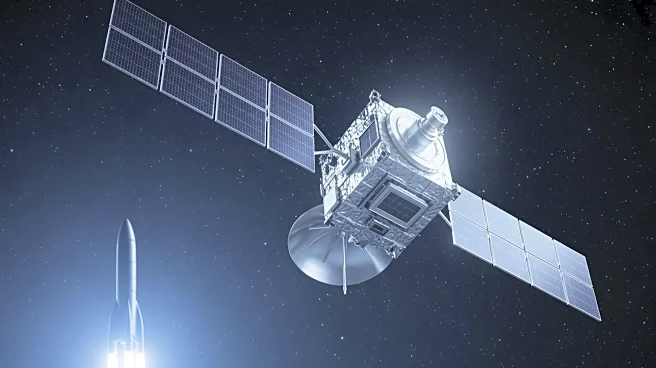
Rocket Lab successfully launched a South Korean disaster-monitoring satellite from its New Zealand site on January 29, 2026. The mission, named 'Bridging the Swarm,' utilized a 59-foot-tall Electron rocket
to deploy the NEONSAT-1A satellite, which is equipped with a high-resolution optical camera for near-real-time natural disaster monitoring of the Korean peninsula. This launch was initially scheduled for December 2025 but faced delays due to additional checkouts and a last-second abort during the first attempt. The NEONSAT program, funded by the Korean Ministry of Science and ICT, aims to enhance disaster monitoring capabilities through a constellation of satellites.
Why It's Important?
The successful deployment of NEONSAT-1A marks a significant advancement in South Korea's ability to monitor and respond to natural disasters. This satellite will provide critical data that can improve disaster preparedness and response strategies, potentially saving lives and reducing economic losses. The mission also highlights the growing collaboration between international space agencies and private companies like Rocket Lab, which are playing an increasingly vital role in global space exploration and satellite deployment. This collaboration can lead to more efficient and cost-effective space missions, benefiting scientific research and technological development.
What's Next?
Following the successful launch, the NEONSAT-1A satellite will begin its mission to monitor natural disasters in near-real-time. The data collected will be analyzed by Korean academic, industry, and research institutions to enhance disaster response strategies. Rocket Lab, having completed its second launch of 2026, will continue to focus on expanding its launch capabilities and supporting international satellite deployment efforts. The success of this mission may lead to further collaborations between Rocket Lab and other countries seeking to enhance their satellite networks.