







What's Happening?
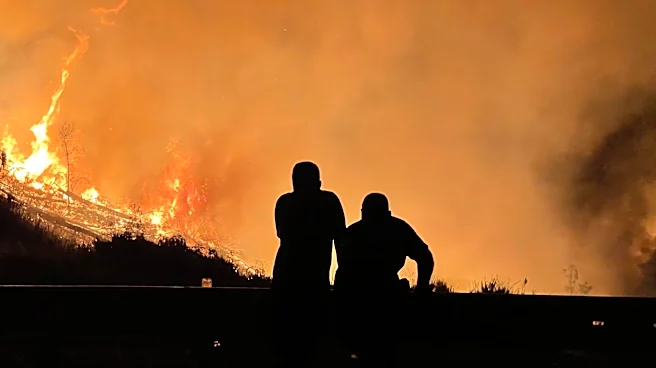
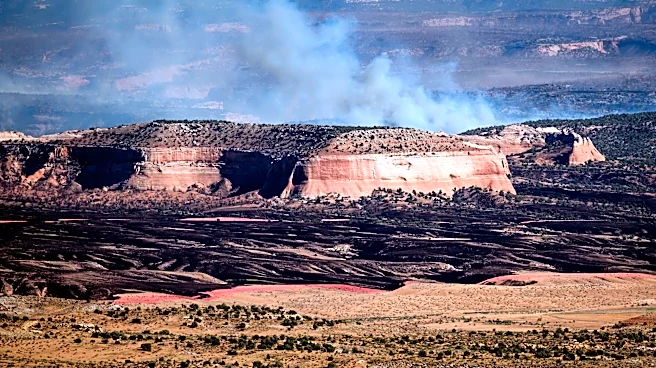
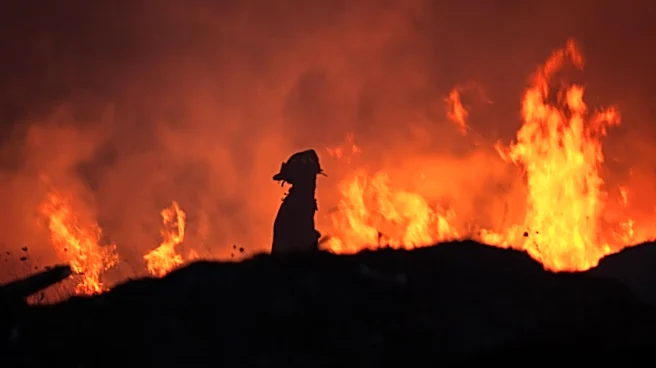
The Trump administration has revived a controversial policy aimed at quickly extinguishing all wildfires, following the deaths of three U.S. government firefighters in Colorado. These firefighters were part of the newly created U.S. Wildland Fire Service,
which was established without congressional approval by consolidating personnel from four Interior Department agencies. The policy marks a shift from previous strategies that allowed some fires to burn naturally to reduce fuel loads. Critics argue that the policy benefits private fire aviation companies and does not address the root causes of catastrophic wildfires, such as climate change and dense forests. The policy has also led to confusion among firefighters regarding their roles and responsibilities.
Why It's Important?
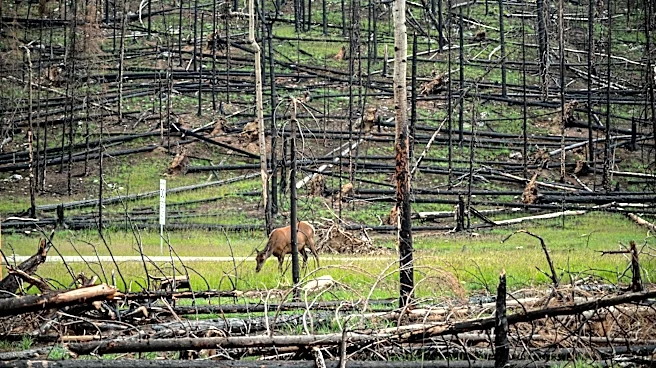
The revival of the full suppression policy has significant implications for wildfire management in the U.S. It prioritizes rapid response to fires, potentially benefiting private companies involved in aerial firefighting. However, it may overlook the ecological benefits of allowing some fires to burn naturally, which can prevent larger, more destructive fires. The policy could also strain resources and put firefighters at greater risk, as seen in the recent fatalities. The approach may not effectively address the increasing frequency and intensity of wildfires driven by climate change, raising concerns about long-term sustainability and safety.
What's Next?
The new policy and agency structure will likely face scrutiny from lawmakers, environmental groups, and firefighting professionals. There may be calls for a reassessment of the policy's effectiveness and safety, especially in light of the recent fatalities. The administration may need to address the confusion and operational challenges within the newly formed Wildland Fire Service. Additionally, there could be discussions on balancing immediate fire suppression with long-term forest management strategies to mitigate wildfire risks.
Beyond the Headlines
The policy's revival highlights the ongoing debate over wildfire management strategies in the context of climate change. It raises questions about the role of private companies in public safety operations and the potential influence of political and economic interests on environmental policies. The situation underscores the need for comprehensive approaches that integrate fire suppression with sustainable land management and climate adaptation strategies.