






What's Happening?
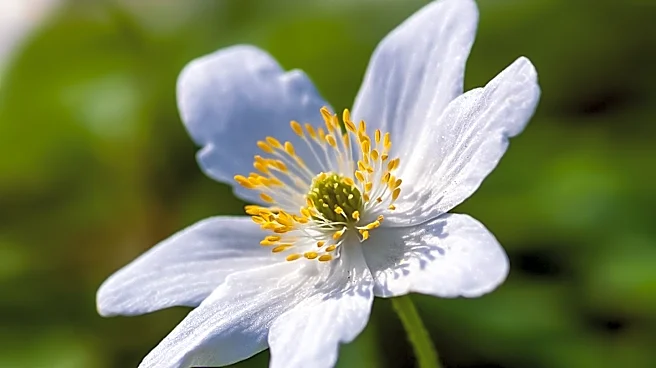
The Canada anemone (Anemone canadensis) is a native North American wildflower characterized by its white, cup-shaped blooms with golden stamen centers, appearing from late spring into early summer. This perennial thrives in partial shade and consistently
moist, humus-rich soil, making it suitable for rain gardens, pond edges, and stream banks. It can reach heights of 30 to 60 cm. While it offers generous blooms and requires minimal care, a key characteristic is its aggressive spreading habit through creeping rhizomes, which can extend a meter or more annually. This rapid spread can lead to it overrunning delicate neighboring plants and lawns if not contained. In contrast, the Japanese anemone, an Asian hybrid, blooms later in the season (late summer to autumn), grows taller, prefers medium moisture, and forms a more contained clump. Other related species like Anemone virginiana (Thimbleweed) and Anemone sylvestris (Snowdrop Anemone) also exhibit varying growth habits and moisture preferences.
Why It's Important?
The aggressive spreading nature of the Canada anemone presents both opportunities and challenges for U.S. gardeners and landscape designers. For those aiming to naturalize wet ground or quickly cover large areas, its vigorous growth is an advantage, providing extensive ground cover and a profusion of white flowers. However, for gardeners with mixed borders or smaller spaces, its tendency to overrun other plants necessitates careful planning and containment strategies, such as installing rhizome barriers or planting it in buried containers. This characteristic impacts the biodiversity of garden ecosystems, as it can outcompete less robust native or ornamental species. Understanding its growth habit is crucial for sustainable landscaping, preventing unintended ecological shifts in managed environments, and ensuring the health and balance of diverse plant communities within U.S. gardens and public green spaces. Its role as a pollinator plant, feeding native bees and syrphid flies, also highlights its ecological importance.
What's Next?
Gardeners planning to incorporate Canada anemone into their landscapes will need to implement containment measures from the outset. This includes installing rhizome barriers at least 30 cm deep around the colony, planting it in large bottomless containers, or confining it between hard surfaces. Regular maintenance, such as edging around the colony with a sharp spade each spring and autumn to sever escaping runners, will be necessary to manage its spread. For existing plantings, dividing congested colonies every two to three years in autumn or early spring is recommended to maintain flowering vigor. Researchers and horticulturalists may continue to explore methods for managing its spread in naturalized settings or develop cultivars with less aggressive growth habits to broaden its appeal for diverse garden applications across the U.S. The plant's adaptability to various soil conditions, from slightly acidic to alkaline, and its hardiness across USDA zones 3-8, suggest its continued prevalence in U.S. landscaping.
Beyond the Headlines
The contrasting growth habits of native species like the Canada anemone and introduced species like the Japanese anemone underscore broader ecological considerations in U.S. horticulture. The Canada anemone's aggressive spread, while natural to its ecosystem, highlights the importance of selecting appropriate plants for specific garden contexts to avoid unintended ecological consequences. This situation prompts discussions about the definition of 'weed' versus 'wildflower' and the role of human intervention in managing plant populations. The plant's ability to thrive in challenging conditions, such as heavy clay and consistently moist soil, also positions it as a valuable resource for ecological restoration projects, particularly in areas prone to wet conditions. Its contribution to pollinator support further emphasizes the interconnectedness of plant choices and local wildlife, influencing broader conservation efforts and the promotion of native plant diversity in U.S. landscapes.