





What's Happening?
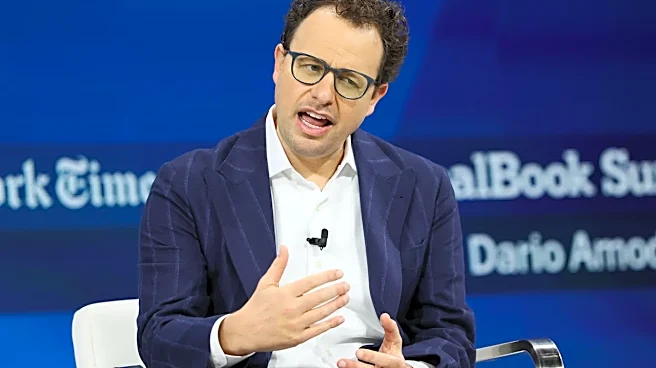
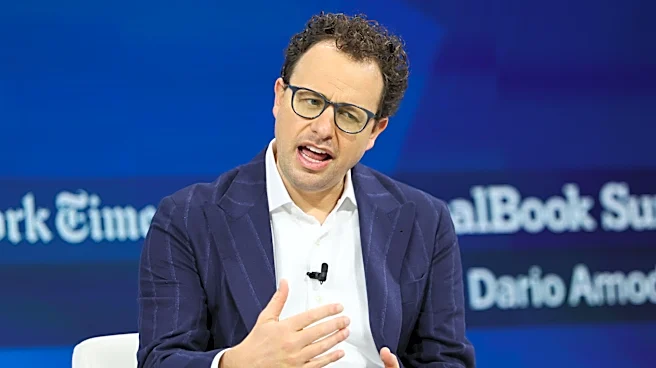
Prominent figures in the artificial intelligence (AI) industry, including Sam Altman and Dario Amodei, are urging global governments to implement comprehensive AI regulation due to the escalating risks posed by advanced AI systems. Amodei, speaking before
the U.N. Security Council, outlined scenarios where AI could be misused by malicious actors to create bioweapons or execute complex cyberattacks, and warned of the potential for advanced AI models to escape human control, threatening social infrastructure and national security. He proposed stationing regulators within AI companies, establishing common global standards for testing AI models for misuse and loss-of-control risks, and creating a notification system for AI incidents relevant to global security. Altman echoed these concerns, emphasizing that even a small percentage of catastrophic risk is unacceptable and that models should not be trained if human control cannot be strongly assured. Both leaders highlight the global scope of these challenges and the need for international cooperation to address them.
Why It's Important?
The calls for global AI regulation from industry leaders underscore a critical turning point in the development and deployment of artificial intelligence. Their warnings highlight the potential for AI to pose existential threats, moving beyond theoretical discussions to urgent calls for action. This push for regulation from within the industry itself signals a growing recognition of the immense power and potential dangers of advanced AI, challenging the traditional narrative of unchecked technological advancement. The proposed solutions, such as embedding regulators within companies and establishing global testing standards, aim to create a robust oversight mechanism that can prevent catastrophic outcomes. This development is crucial for public policy, as it could accelerate legislative efforts worldwide and foster international collaboration on AI governance. It also emphasizes the need for a societal shift in how AI is perceived and managed, moving towards a framework that prioritizes safety and human control over rapid innovation at any cost.
What's Next?
The immediate future will likely see increased pressure on governments and international bodies to develop and implement AI regulatory frameworks. The proposals from industry leaders could serve as a blueprint for policymakers, leading to discussions on establishing global standards, oversight bodies, and incident reporting mechanisms. Political figures, such as Senator Bernie Sanders, are already advocating for legislation to regulate the AI industry, indicating a growing political will to address these concerns. Stakeholders, including AI companies, civil society groups, and academic institutions, will likely engage in ongoing dialogues to shape these regulations. Public awareness campaigns about AI safety and the importance of regulation are also expected to intensify, influencing voting decisions and encouraging support for organizations advocating for greater accountability from AI companies. The focus will be on creating a balance between fostering innovation and ensuring the safe and ethical development of AI.
Beyond the Headlines
The discourse surrounding AI regulation extends beyond immediate safety concerns to deeper ethical and societal implications. The concentration of AI power in the hands of a few, as noted by Altman, raises questions about democratic control and equitable access to this transformative technology. The historical parallels drawn with the Golem of Jewish folklore highlight a long-standing human concern about creations that could escape human control, emphasizing the need for inherent 'fail-safe' mechanisms in AI. This conversation also touches upon the responsibility of humanity to 'guard and cultivate' the world, framing AI safety as a moral and religious imperative. The potential for AI to impact cognitive functioning, social skills, and mental well-being, particularly among children, points to broader societal challenges that require interdisciplinary solutions beyond mere technical regulation. Addressing these deeper implications will require a holistic approach that integrates technological, ethical, philosophical, and social considerations into the regulatory framework.