





What's Happening?
Hawaii's Democratic governor has signed a new law aimed at reducing corporate influence in politics, a move that comes in response to the 2010 U.S. Supreme Court ruling in Citizens United v. Federal Election Commission. This ruling allowed corporations
and unions to spend unlimited amounts on political campaigns, provided they do not directly donate to candidates. The new law, effective July 1, 2027, redefines corporations in a way that restricts their ability to spend on elections. This legislative action is part of a broader effort to address the surge in 'dark money'—funds from groups that are not required to disclose their donors—used in political campaigns. The law has faced opposition from Hawaii's Attorney General Anne Lopez, who argues that it may be difficult and costly to defend in court. Despite this, proponents like Tom Moore from the Center for American Progress believe it sends a strong message against corporate and dark money in politics.
Why It's Important?
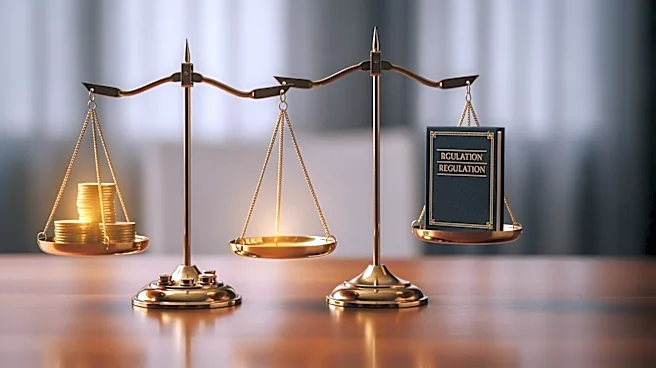
The enactment of this law in Hawaii represents a significant pushback against the influence of corporate money in U.S. politics, a contentious issue since the Citizens United decision. By redefining corporate entities to limit their political spending, Hawaii is setting a precedent that could inspire similar legislative efforts in other states. This move could potentially alter the landscape of political campaign financing, reducing the sway of large, anonymous donations in elections. The law's impact could be far-reaching, affecting how political campaigns are funded and possibly leading to more transparent electoral processes. However, the legal challenges anticipated by the Attorney General suggest that the law's implementation could face hurdles, potentially influencing its effectiveness and the willingness of other states to adopt similar measures.
What's Next?
As the law takes effect in 2027, its implementation will be closely watched by both supporters and opponents. Legal challenges are expected, which could delay or alter its enforcement. The outcome of these challenges will be crucial in determining the law's future and its potential as a model for other states. Additionally, the response from corporations and political groups will be telling, as they may seek new strategies to influence elections within the constraints of the new law. The broader national conversation on campaign finance reform may also gain momentum, with Hawaii's law serving as a catalyst for further debate and legislative action.