




What's Happening?
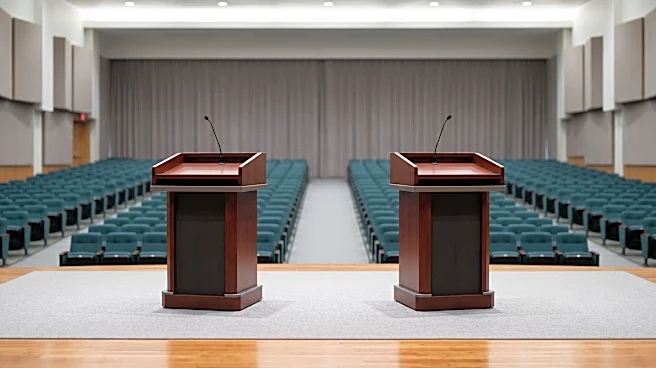
Debate negotiations for Wisconsin's 3rd Congressional District race have reached a deadlock, with both Democratic candidate Rebecca Cooke and incumbent Republican Rep. Derrick Van Orden's campaigns trading accusations. Cooke's campaign alleges that Rep. Van Orden is avoiding
a nonpartisan debate organized by the La Crosse Chamber of Commerce, claiming he backed out of previously agreed-upon October dates in favor of partisan forums. They state that Van Orden has not held an in-person town hall with constituents since taking office and is 'running out the clock' to avoid defending his record on issues like healthcare and tax breaks for data centers. Conversely, the Van Orden campaign asserts that it is Cooke's team that is unwilling to participate, releasing audio recordings of negotiation calls to support their claim. They accuse Cooke of declining four debate invitations and fabricating reasons for the breakdown in talks. As of Monday afternoon, the Cooke campaign declared any debate between the two candidates 'dead in the water.'
Why It's Important?
The collapse of debate negotiations in Wisconsin's 3rd Congressional District is significant for several reasons. Firstly, it deprives voters of a direct, structured comparison of the candidates' stances on critical issues, potentially hindering informed decision-making. Debates are a traditional and often crucial platform for candidates to articulate their policies, challenge opponents, and demonstrate their leadership capabilities. The mutual accusations of dodging debates also reflect a broader trend of increasing polarization and distrust in political discourse, where campaigns prioritize controlling narratives over direct engagement. This situation could lead to a campaign dominated by advertisements and social media, rather than substantive policy discussions. Furthermore, the allegations regarding Rep. Van Orden's record on healthcare and tax breaks, and Cooke's past professional ties, highlight key policy battlegrounds that will likely shape the election outcome, impacting local industries and residents.
What's Next?
With debate negotiations officially stalled, both campaigns are expected to intensify their efforts to reach voters through alternative channels. This will likely involve increased advertising, social media campaigns, and targeted outreach events. The Van Orden campaign's release of audio recordings suggests a strategy to control the narrative around the debate collapse, and the Cooke campaign will likely counter with their own messaging regarding Van Orden's alleged avoidance of non-partisan forums. Voters in the 3rd Congressional District will need to rely on campaign materials, news coverage, and individual candidate appearances to understand their positions. The lack of direct debate could also lead to more aggressive campaigning, as each side attempts to define the other without the opportunity for direct rebuttal in a shared forum. The outcome of this election will determine who represents the district in Congress, influencing legislative decisions on national issues.
Beyond the Headlines
The inability of candidates to agree on debate terms, particularly in a competitive congressional district, points to deeper issues within the U.S. political landscape. It underscores a growing reluctance among some incumbents to engage in unscripted, non-partisan forums, possibly due to concerns about gaffes or being held accountable for their records in a direct manner. This trend can erode public trust in the electoral process and the perceived transparency of political figures. The use of recorded conversations in campaign disputes also raises questions about the ethics of political negotiations and the increasing weaponization of private interactions. Ultimately, the absence of debates can contribute to a less informed electorate, making it harder for citizens to discern genuine policy differences from campaign rhetoric, and potentially leading to lower voter engagement or increased cynicism about politics.