




What's Happening?
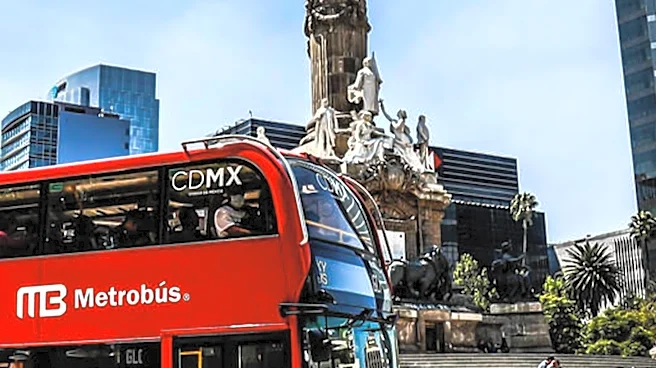
Mexico City is on track to welcome 65.9 million visitors in 2026, a figure that would nearly double the tourist arrivals from a decade prior. This projection was announced by the city's Tourism Minister, Alejandra Frausto Guerrero, during an appearance
at a local Congress. The anticipated growth represents a 13.6% increase in tourism between 2024 and 2026. The surge in visitors is attributed to a variety of attractions, including concerts, sporting events, and cultural activities hosted within the city. Beyond just an increase in visitor numbers, Mexico City is also experiencing a significant rise in tourist spending. Hotel stays alone generated nearly 120 billion pesos (approximately US $6.44 billion) from January to September of the current year, indicating a robust economic impact from the growing tourism sector.
Why It's Important?
This projected growth in tourism for Mexico City signifies a substantial economic boon for the region, with direct implications for various sectors. The increase in visitor numbers and spending will likely stimulate job creation in hospitality, retail, transportation, and entertainment industries. For U.S. travelers, Mexico City's growing appeal as a destination, driven by diverse events and cultural offerings, presents more travel opportunities. The economic benefits extend to local businesses, from small vendors to large hotel chains, as increased demand translates into higher revenues. The city's strategic focus on hosting major events and promoting its cultural heritage appears to be a successful model for sustainable tourism growth, potentially influencing other urban centers looking to boost their visitor economies. This trend also highlights Mexico City's strengthening position as a major international travel hub, attracting a global audience.
What's Next?
To accommodate the projected influx of tourists, Mexico City will likely continue to invest in its tourism infrastructure, including hotels, transportation networks, and event venues. The city's tourism ministry may further intensify its efforts to promote upcoming concerts, sporting events, and cultural festivals to maintain this growth trajectory. Local businesses are expected to adapt to the increased demand by expanding services and offerings tailored to international visitors. There may also be a focus on managing the impact of increased tourism on local communities and resources, ensuring sustainable development. Continued collaboration between government entities and private sector stakeholders will be crucial to capitalize on this growth and address any potential challenges arising from the significant increase in visitor numbers.
Beyond the Headlines
The rapid growth in Mexico City's tourism sector points to broader shifts in global travel patterns and destination preferences. The city's success in attracting visitors through a diverse array of events and cultural experiences suggests a growing demand for immersive and experiential travel. This trend could lead to increased cultural exchange and a deeper appreciation for Mexican heritage on a global scale. However, such rapid growth also brings potential challenges, including increased pressure on urban infrastructure, potential gentrification in popular tourist areas, and environmental concerns. The city's ability to balance economic benefits with sustainable development and the preservation of local culture will be a critical long-term consideration. This also highlights the increasing importance of cultural diplomacy and event tourism as tools for urban development and international positioning.