









What's Happening?
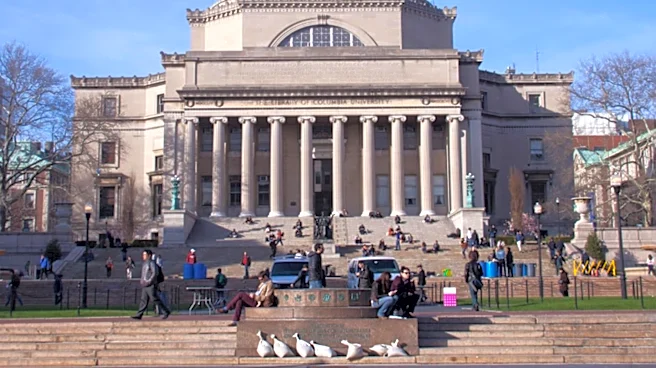
As the United States approaches its 250th anniversary, Columbia students are re-evaluating the concept of the American Dream. Traditionally associated with homeownership and stable careers, the American Dream is now seen by many students as more personal,
focusing on meaningful work and financial security. A survey by UCLA’s Center for Scholars & Storytellers found that while 86% of young Americans aspire to achieve the American Dream, 60% find it personally challenging. Columbia career advisor Jennifer Halperin notes that students increasingly expect to work multiple jobs to make ends meet, reflecting a shift in expectations. The rise of freelancing and independent careers is also noted, with 28% of U.S. skilled knowledge workers now freelancing.
Why It's Important?
This shift in the perception of the American Dream highlights broader economic and societal changes affecting young Americans. The traditional markers of success are being replaced by more flexible and personal definitions, influenced by economic pressures and technological advancements. This redefinition could impact future workforce trends, with more individuals pursuing freelance and independent careers. The changing expectations also suggest a potential shift in consumer behavior and economic participation, as younger generations prioritize different values and goals.
What's Next?
As students continue to redefine success, educational institutions and employers may need to adapt to these changing expectations. This could involve offering more flexible career paths and supporting diverse career goals. The rise of freelancing and independent work may also prompt policy changes to support these career paths, such as improved access to benefits and protections for gig workers. Additionally, the evolving concept of the American Dream may influence political discourse and policy-making, as younger generations advocate for changes that align with their values and aspirations.