
What's Happening?
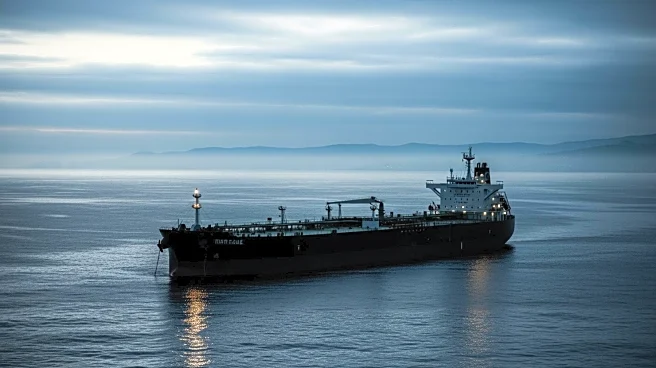
U.S. forces have seized an oil tanker named The Skipper off the coast of Venezuela. The vessel, previously known as the Adisa, was sanctioned by the U.S. in 2022 for facilitating oil trades for Hezbollah
and Iran’s Islamic Revolutionary Guard Corps-Quds Force. The tanker was carrying Venezuelan crude oil destined for Cuba, with an ultimate destination in Asia, brokered through Cuban sellers. Satellite imagery showed the Skipper docked near the Venezuelan city of Barcelona, while its transponder falsely indicated a location off the coast of Guyana. The ship was flying a Guyana flag, despite not being registered there. Prior to its seizure, the Skipper had docked in Egypt, the UAE, and Hong Kong, and was noted to have loitered off Iran’s coast.
Why It's Important?
The seizure of The Skipper highlights ongoing U.S. efforts to enforce sanctions against entities involved in illicit oil trading, particularly those linked to Iran and Hezbollah. This action underscores the U.S. commitment to curbing activities that undermine international sanctions and supports its geopolitical stance against Iran's influence. The incident may strain U.S.-Venezuela relations further, as it involves Venezuelan crude oil. It also reflects the broader implications of international sanctions on global oil trade, potentially affecting oil prices and market stability.
What's Next?
The U.S. may continue to monitor and intercept vessels involved in sanctioned activities, potentially leading to further seizures. This could provoke diplomatic responses from Venezuela and its allies, possibly escalating tensions. The international community, particularly countries involved in oil trade with Venezuela, may need to reassess their shipping practices to avoid similar incidents. The situation could also prompt discussions on the effectiveness and enforcement of international sanctions.