






What's Happening?
The World Bank Group's Board of Executive Directors has approved $300 million in financing for the Sindh Transformational Accelerated Rural Water Supply, Sanitation, and Hygiene Services Phase 1 Project (STAR WASH-1) in Pakistan. This project aims to expand
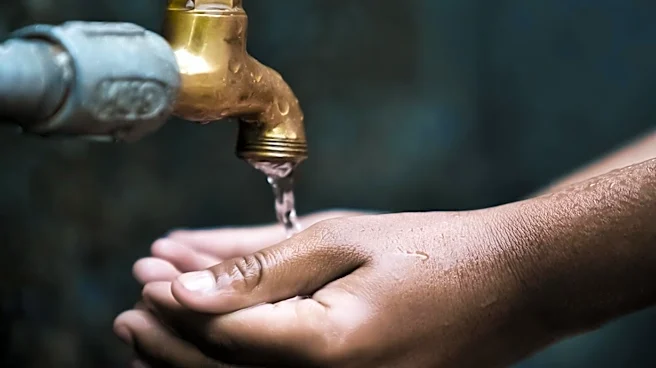
access to safe water supply, sanitation, and hygiene (WASH) services for 1.5 million people in selected rural areas of Sindh Province. STAR WASH-1 is the initial phase of a ten-year, four-phase program, with a total project cost of $540 million, including $150 million from the Asian Development Bank and $90 million equivalent in counterpart funding from the Government of Sindh. The initiative will fund climate-resilient infrastructure, such as solar-powered water supply systems, and implement an integrated social and behavior change program to promote better hygiene. The project also seeks to formalize the Sindh People’s Housing for Flood Affectees as a rural WASH utility company.
Why It's Important?
This significant investment in WASH services is crucial for improving public health and human development outcomes in rural Sindh, where unsafe water and inadequate sanitation contribute to high rates of childhood diarrhea and stunting. By providing access to safe water and sanitation, the project directly addresses a major underlying driver of these health issues. The focus on climate-resilient infrastructure, including solar-powered systems, ensures the sustainability of these services in a region vulnerable to climate change impacts. Furthermore, the project's aim to generate over 14,000 jobs will provide economic opportunities and contribute to local development. The programmatic approach, extending over ten years, signifies a long-term commitment to transforming rural WASH services into financially sustainable and professionalized systems, moving beyond one-off infrastructure provision.
What's Next?
STAR WASH-1 will proceed with the implementation of its first phase, focusing on providing safe water and sanitation to 1.5 million people and rolling out hygiene promotion programs. The project will work towards halving water contamination at the point of use and connecting 80 percent of targeted rural communities to professional water and sanitation service providers. The formalization of the Sindh People’s Housing for Flood Affectees as a rural WASH utility company will be a key step in establishing sustainable service delivery models. Over the next decade, the subsequent phases of the Pakistan Rural Water, Sanitation, and Hygiene Services Programme will continue to expand and deepen these interventions, aiming for comprehensive and lasting improvements in WASH access and health outcomes across rural Sindh.
Beyond the Headlines
The World Bank's investment highlights the interconnectedness of climate resilience, public health, and economic development. By linking WASH services to the reduction of stunting and improved human development, the project underscores the broader societal benefits of infrastructure investments. The emphasis on behavior change alongside infrastructure development is critical, as sustainable health outcomes depend not only on access to facilities but also on improved hygiene practices. The multi-phase programmatic approach reflects a growing recognition that complex development challenges require sustained, long-term engagement rather than isolated interventions. This project could serve as a model for integrating climate resilience into essential service delivery in other vulnerable regions, demonstrating how international financing can support holistic development goals.