








What's Happening?
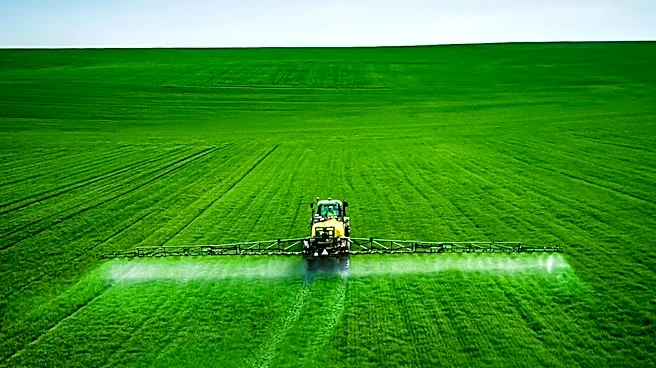
Artificial intelligence (AI) is transforming the U.S. agricultural sector, moving it from a labor-intensive industry to a data-driven and technology-based field. Young farmers are increasingly using AI to reinterpret traditional agricultural knowledge
through big data analysis and digital technology, creating new value in their practices. This shift, fueled by advancements like generative AI since ChatGPT's release in 2022, has led to the emergence of 'smart farming,' which utilizes AI tools, sensors, automated machinery, and data analysis to help farmers monitor crops, manage resources, and make informed decisions. While AI offers increased efficiency and productivity, it also presents challenges, including potential environmental consequences such as increased energy consumption, reliance on fossil fuels, and risks of soil and water pollution, as well as biodiversity loss from intensive technological farming. The integration of AI also demands new digital and technical skills from the agricultural workforce.
Why It's Important?
The integration of AI into U.S. agriculture is important because it promises to enhance productivity and sustainability, addressing long-standing challenges in the sector. By enabling more precise farming techniques, AI can help minimize chemical runoff and habitat destruction, potentially leading to more environmentally friendly practices. However, this technological shift also carries significant economic and social implications. The high investment and ongoing maintenance costs associated with advanced AI machinery could exacerbate the gap between large, wealthy farms and smaller, family-owned operations, potentially increasing income inequality within the agricultural community. This could lead to further industrial restructuring, favoring large enterprises and making it difficult for small and midsize farms to compete, thereby impacting the diversity and resilience of the U.S. agricultural landscape.
What's Next?
The future of U.S. agriculture will depend on how effectively new technologies like AI and automation are combined with human judgment and traditional agricultural knowledge. To mitigate potential negative impacts and ensure equitable adoption, government incentives such as direct financial support and tax reductions for smart farming practices are crucial. Additionally, public assistance programs, including subsidies for AI diagnostic tools and digital literacy initiatives, could help smallholders integrate these technologies. Research and development efforts may also need to shift focus towards scale-neutral developments, such as lightweight edge AI, to make advanced tools accessible to a broader range of farms, not just large enterprises. This balanced approach aims to foster a more productive and sustainable agricultural future that partners human expertise with technological innovation.
Beyond the Headlines
Beyond the immediate benefits of efficiency and the challenges of environmental impact and economic disparity, the AI revolution in U.S. agriculture raises deeper questions about the nature of scientific knowledge and cultural heritage. The source highlights how traditional knowledge, often rooted in Indigenous healing practices and local ecological understanding, remains largely outside institutions that define 'legitimate science.' The Eurocentric science curricula, by excluding these traditions, create a disconnect for students from their culture. As AI reinterprets this traditional knowledge through big data, there's an opportunity to bridge this divide, but also a risk of further marginalizing non-Western scientific contributions if not approached thoughtfully. The ethical implications extend to ensuring that technological advancements do not overshadow the invaluable, experience-based wisdom of generations of farmers, emphasizing the need for a holistic approach that values both innovation and tradition.