






What's Happening?
Two college students, Kaden Matsuda, 19, and Jackson Donlon, 20, from Colorado Mountain College’s Leadville campus, were found dead after going missing during a hiking trip in the Rocky Mountains. They had set out last Friday for Ice Mountain, a 13,958-foot
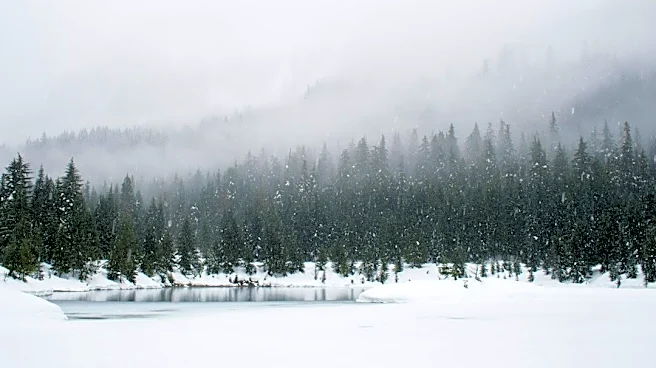
peak, but a severe snowstorm hit the area on Saturday, dumping up to two feet of snow. The students were reported missing on Monday morning after failing to return by Sunday. Their bodies were discovered on Wednesday afternoon in a basin of West Apostle Mountain, approximately 100 miles southeast of Aspen. Both Matsuda and Donlon were outdoor enthusiasts; Matsuda was studying to be a wildland firefighter, and Donlon was pursuing outdoor recreation leadership.
Why It's Important?
The tragic deaths of Kaden Matsuda and Jackson Donlon underscore the inherent dangers of outdoor recreation in mountainous regions, even for experienced individuals. This incident highlights the rapid and unpredictable weather changes that can occur in the Colorado Rockies, emphasizing the critical need for vigilance and preparedness. For educational institutions like Colorado Mountain College, which specializes in outdoor recreation programs, this event serves as a somber reminder of the risks involved in their field of study and the importance of robust safety protocols. The incident also brings attention to the challenges faced by search and rescue operations in harsh conditions, as approximately 60 volunteers, helicopters, drones, and dogs were deployed in the search. The Chaffee County Sheriff noted that the students were well-prepared, but 'mother nature throws you a curveball.'
What's Next?
Authorities are currently waiting for gusty winds to subside to allow a helicopter crew to retrieve the bodies of Kaden Matsuda and Jackson Donlon from West Apostle Mountain. Further poor weather was expected to begin on Friday, which could have limited aerial search capabilities if the bodies had not been found. The Chaffee County Sheriff's Office indicated that the location of their tent and bodies suggested they changed their original plan to hike Ice Mountain and were instead aiming for West Apostle Mountain, and were well into a hike when they died. The incident will likely prompt discussions within Colorado Mountain College and other outdoor education programs regarding safety measures, risk assessment, and emergency response protocols for student expeditions in challenging environments.
Beyond the Headlines
This incident transcends a simple accident, touching upon the broader cultural relationship with wilderness and the pursuit of extreme sports. The students' dedication to outdoor careers, such as wildland firefighting and outdoor recreation leadership, reflects a growing trend of individuals seeking connection with nature and adventure. However, it also exposes the harsh realities and unforgiving nature of high-altitude environments, where human preparedness can sometimes be overwhelmed by natural forces. The community's response, including the extensive search efforts and the outpouring of grief from the college, highlights the strong bonds formed within outdoor communities and the collective understanding of the risks involved. This tragedy serves as a poignant reminder of the delicate balance between human ambition and the raw power of the natural world.