
What's Happening?
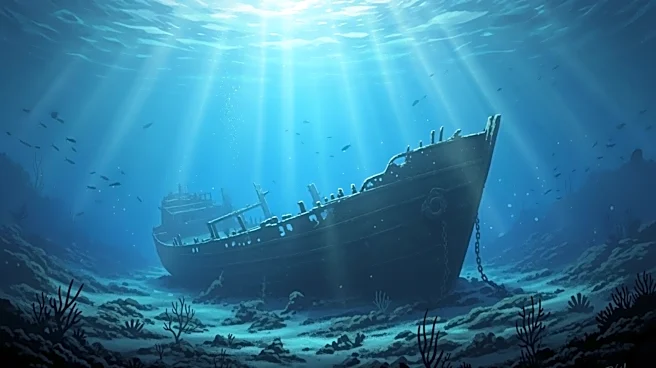
The French military has discovered the deepest shipwreck ever found in French territorial waters, located approximately 1.5 miles off the coast of Ramatuelle. This 16th-century shipwreck, named Camarat
4, was found during routine sonar investigations of the French seafloor. The wreck is situated 8,200 feet underwater, making it one of the most well-preserved due to its inaccessibility to salvagers and looters over the centuries. The ship, believed to be a merchant vessel from the Liguria region, now northern Italy, was carrying a cargo of ceramics, including over 200 earthenware pitchers and around 100 yellow plates. The discovery was made using the A18D deep-sea autonomous underwater vehicle, followed by a remotely operated vehicle that provided detailed photography of the site. French agencies plan to create a digital 3D model of the ship and further investigate the site to sample artifacts.
Why It's Important?
This discovery is significant as it provides a rare opportunity to study a virtually intact 16th-century shipwreck. The depth and preservation of the site offer unique insights into maritime history and trade routes of the period. The ship's cargo, including ceramics characteristic of Ligurian productions, can provide valuable information about the economic and cultural exchanges between regions during the 16th century. The research could enhance understanding of historical shipbuilding techniques and the materials used. Additionally, the discovery highlights the potential of modern technology in uncovering and preserving underwater cultural heritage, which can contribute to the fields of archaeology and history.
What's Next?
French agencies plan to return to the site to conduct further research. This includes creating a comprehensive photogrammetry of the wreck and targeted sampling of artifacts. The research will be carried out with the assistance of a panel of experts, aiming to explore the site's surroundings and gather more data on the ship's construction and cargo. The findings could lead to new insights into the maritime history of the region and potentially influence future underwater archaeological methods and preservation techniques.