


What's Happening?
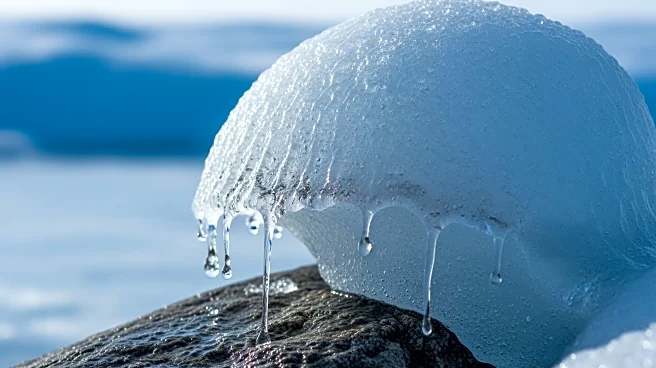
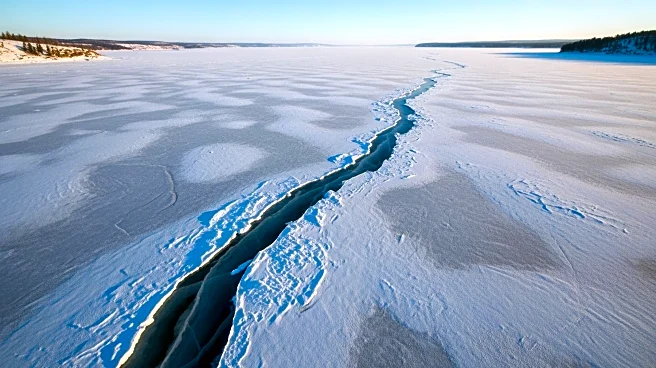
Researchers have discovered that the Prudhoe Ice Dome in northern Greenland, which melted completely around 7,000 years ago, could face similar conditions by the end of this century due to global warming. The study involved drilling 500 meters into the ice
to extract a core sample, revealing that the ice dome had melted during a period when temperatures were 3-5°C warmer than today. This historical melting event is being used to understand the potential future impact of climate change on the Greenland ice sheet, which could contribute significantly to global sea level rise.
Why It's Important?
The melting of the Greenland ice sheet is a critical concern for global sea levels, with potential increases ranging from tens of centimeters to a meter by 2100. This study highlights the sensitivity of the ice sheet to temperature changes, underscoring the urgency of addressing climate change. The findings provide valuable data for refining models that predict ice sheet behavior and sea level rise, which are crucial for coastal planning and climate policy. The research also emphasizes the need for further exploration of Greenland's ice to improve predictions and prepare for future environmental challenges.
What's Next?
The GreenDrill project, funded by the National Science Foundation, will continue to explore the Greenland ice sheet to gather more data on past climate conditions. This ongoing research aims to refine predictions about which parts of the ice sheet are most vulnerable to melting. The study's results may influence climate models and inform international climate policy discussions. As the scientific community continues to investigate, policymakers and environmental groups may use these findings to advocate for stronger climate action to mitigate the impacts of global warming.
Beyond the Headlines
The study of Greenland's ice sheet not only informs predictions about sea level rise but also contributes to understanding the broader impacts of climate change on polar regions. The potential feedback mechanisms, such as the loss of Arctic sea ice, could exacerbate warming in these areas, leading to more rapid ice melt. This research highlights the interconnectedness of global climate systems and the importance of comprehensive climate models that consider these complex interactions.