




What's Happening?
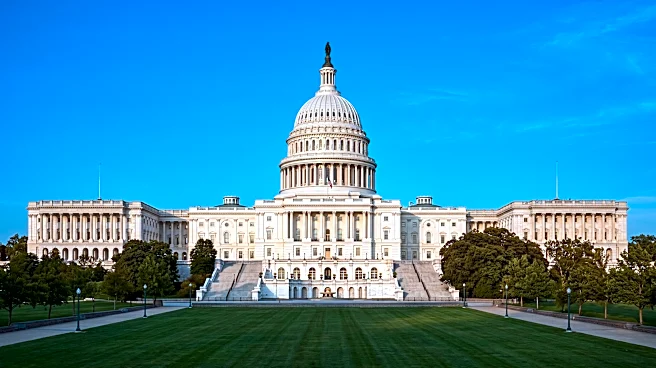
U.S. Representative Maxwell Frost has introduced the "No Homeless Detention Centers Act," a bill designed to prevent the use of federal funding for facilities that detain homeless individuals or compel them into labor. This legislative effort comes in response
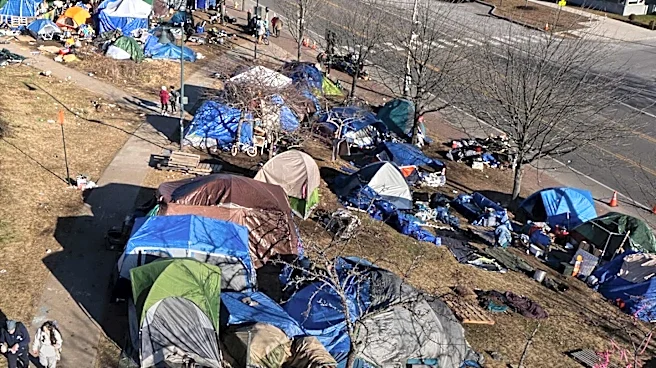
to a growing trend of criminalizing homelessness, which Frost and his Democratic colleagues argue treats homelessness as a crime rather than a housing crisis. Frost highlighted laws like Florida's ban on public sleeping, signed by Governor Ron DeSantis in 2024, as examples of policies that worsen the situation for those without housing. He noted that such policies have led to increased arrests in his district and other areas. The bill also addresses concerns raised by Eric Tars, legal director of the National Homelessness Law Center, who stated that some city-level ordinances, influenced by conservative think tanks, could lead to the creation of forced homeless camps, which he likens to detention centers.
Why It's Important?
The "No Homeless Detention Centers Act" is significant because it challenges a punitive approach to homelessness that could have profound societal and ethical implications. By seeking to prohibit federal funding for such facilities, the bill aims to redirect resources towards housing-first solutions and support services, which are generally considered more effective and humane. The criminalization of homelessness not only exacerbates the challenges faced by vulnerable populations but also strains local law enforcement and judicial systems. If federal funding were to support detention centers for the homeless, it could normalize and expand a system that prioritizes incarceration over addressing the root causes of homelessness, such as lack of affordable housing, mental health services, and economic opportunities. This legislation underscores a fundamental debate about how society should address poverty and housing insecurity, with proponents arguing for compassion and systemic solutions over criminalization.
What's Next?
The bill faces a challenging path in the current political climate, particularly with Republican majorities in both the House and Senate. While Representative Frost was joined by several Democratic colleagues, including U.S. Representative Suzanne Bonamici, no Republicans were initial co-sponsors. The legislation will need to gain bipartisan support to advance through Congress. If passed, it would prevent federal funds from being used to establish or operate facilities that detain homeless individuals, potentially shifting federal policy towards more supportive housing initiatives. However, if it fails to pass, the trend of criminalizing homelessness at state and local levels, potentially influenced by President Trump's executive order on "ending crime and disorder on America’s streets," could continue or even accelerate. Advocacy groups and civil society organizations will likely continue to push for housing-first policies and monitor legislative efforts related to homelessness.
Beyond the Headlines
This legislation delves into the deeper societal implications of how homelessness is perceived and addressed in the U.S. The debate over "handcuffs instead of housing" reflects a fundamental tension between public order concerns and human rights. Criminalizing homelessness can perpetuate a cycle of poverty and incarceration, making it even harder for individuals to secure employment, housing, and social services. The bill also highlights the influence of think tanks and model legislation on state and local policies, revealing how ideological frameworks can shape practical approaches to social issues. Furthermore, the discussion around "Alligator Alcatraz" and potential forced camps raises ethical questions about involuntary confinement and the erosion of individual liberties for vulnerable populations. This legislative effort is not just about funding; it's about defining the values that underpin the nation's response to one of its most persistent social challenges, emphasizing dignity and systemic solutions over punitive measures.