
What's Happening?
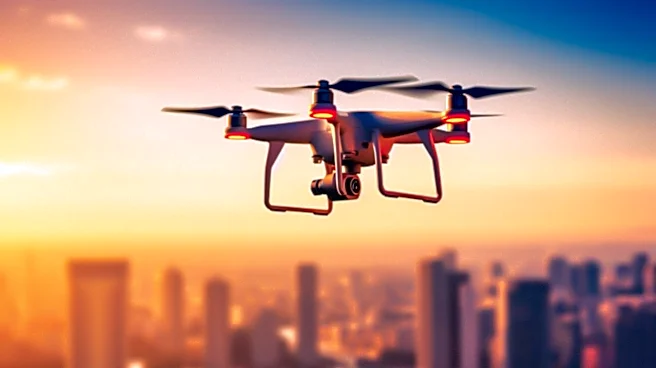
Federal agencies, including the Transportation Security Administration’s Federal Air Marshal Service (FAMS), U.S. Secret Service, FBI, and U.S. Customs and Border Protection, have announced restrictions on unmanned aircraft systems (UAS), commonly known
as drones, during the Republican National Committee’s (RNC) Midterm Convention in Dallas. The convention is scheduled for September 9 and 10, 2026. A Temporary Flight Restriction (TFR) has been established by the Federal Aviation Administration (FAA), prohibiting drone flights within a 3-mile radius of the designated area and up to an altitude of 400 feet. This measure is part of a broader effort to ensure the safety and security of attendees, employees, visitors, and the surrounding community, building on previous security successes like the FIFA World Cup 2026. President Trump and DHS Secretary Markwayne Mullin are committed to maintaining a high level of safety and security for the event. Unauthorized drone operators face severe penalties, including confiscation of their drones, revocation of pilot certificates, civil penalties up to $75,000 per violation, and potential criminal penalties of up to $100,000 in fines and one year in federal prison. Drone operators are advised to check for active flight restrictions using FAA-approved B4UFLY service providers and ensure Remote ID is broadcasting, as disabling it is a separate federal violation.
Why It's Important?
The implementation of drone restrictions for a major political event like the RNC Midterm Convention underscores the evolving landscape of security threats and the proactive measures federal agencies are taking to mitigate them. The increasing accessibility and capabilities of drones present unique challenges for public safety and national security, necessitating strict regulations in sensitive areas. This action highlights the government's commitment to protecting high-profile gatherings from potential aerial threats, whether intentional or accidental. The severe penalties for non-compliance serve as a strong deterrent, emphasizing the seriousness with which these regulations are enforced. Furthermore, the mention of Remote ID requirements reflects a broader push for accountability and identification in drone operations, aiming to enhance airspace safety and facilitate law enforcement efforts. The coordination between multiple federal agencies and local law enforcement, such as the Dallas Police Department, demonstrates a comprehensive approach to event security, ensuring a unified response to any unauthorized drone activity. This precedent could influence security protocols for future large-scale public events across the U.S., impacting drone usage and public awareness.
What's Next?
For the duration of the RNC Midterm Convention on September 9 and 10, 2026, the Temporary Flight Restriction (TFR) will be actively enforced. Federal Air Marshal Service (FAMS) will coordinate with federal, state, and local partners, including the Dallas Police Department, to support the enforcement of the TFR. Authorized counter-UAS capabilities will be deployed to detect and stop unauthorized drone activity. The public is urged to report any unauthorized or unsafe drone activity immediately to 911 or on-site law enforcement. Drone operators are expected to comply with all airspace restrictions, check for active flight restrictions using FAA-approved B4UFLY service providers, and ensure their drones are broadcasting Remote ID. Following the convention, the effectiveness of these security measures will likely be reviewed, potentially influencing future drone regulation and security protocols for similar large-scale events. The ongoing emphasis on Remote ID suggests continued efforts to integrate drone identification into national airspace management, which could lead to further regulatory developments for drone operators nationwide.
Beyond the Headlines
The stringent drone restrictions for the RNC Midterm Convention reflect a growing concern over the weaponization and misuse of unmanned aerial systems, moving beyond simple privacy issues to encompass potential threats to national security and public safety. This development highlights a broader societal shift in how technology, specifically drones, is perceived and regulated in public spaces. The balance between technological advancement and security imperatives is a critical ethical and legal challenge. While drones offer numerous benefits, their potential for surveillance, disruption, or even attack necessitates a robust regulatory framework. The emphasis on Remote ID, for instance, points to a future where drone operations are increasingly transparent and traceable, raising questions about individual privacy versus collective security. This event could also catalyze further innovation in counter-drone technologies and strategies, creating a new segment within the defense and security industries. Ultimately, these measures contribute to a national dialogue on how to integrate emerging technologies safely into society while safeguarding democratic processes and public gatherings.