




What's Happening?
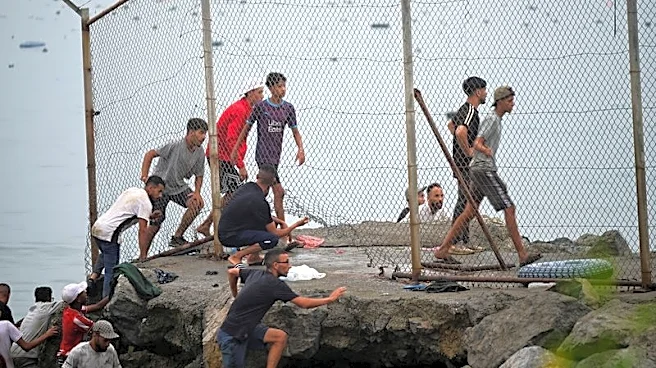
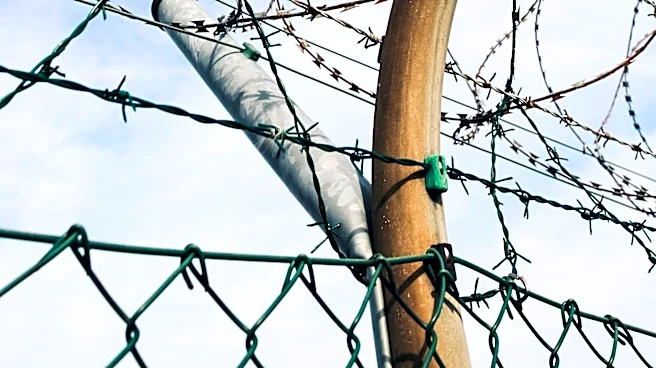
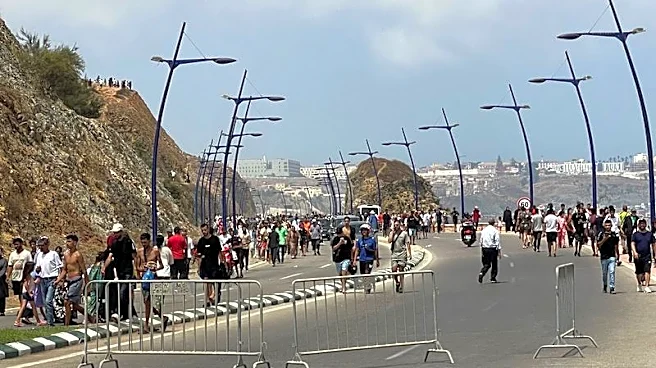
Spain has announced plans to install a 1,600-foot containment fence on the aquatic border between its territory of Ceuta and Morocco. This decision follows a massive influx of migrants, with tens of thousands crossing into Ceuta from Morocco, resulting
in at least 67 deaths. The Spanish Interior Minister, Fernando Grande-Marlaska, stated that most of the migrants have been returned to Morocco. The surge in crossings is attributed to a recent Spanish Supreme Court ruling that complicates the process of turning away migrants arriving by sea. The situation has been described as a humanitarian crisis, with many migrants, including unaccompanied children, sleeping in parks and on sidewalks. Spain has deployed its army and additional forces to manage the situation, and Prime Minister Pedro Sánchez has condemned the crossings as a violation of Spain's territorial integrity.
Why It's Important?
The situation in Ceuta highlights the ongoing challenges of migration and border control in Europe, particularly at the EU's only land borders with Africa. The influx of migrants poses significant humanitarian and logistical challenges for Spain and raises questions about the effectiveness of current immigration policies. The response from Spain, including the deployment of military forces and the construction of a containment fence, underscores the severity of the crisis. This event also has broader implications for EU migration policy and the relationship between Spain and Morocco. The involvement of human trafficking networks exploiting legal loopholes further complicates the issue, necessitating coordinated international efforts to address the root causes of migration and ensure the safety and rights of migrants.
What's Next?
Spain is working on legislative measures to facilitate the repatriation of migrants who entered the country irregularly. The government may modify existing laws to ensure efficient border repatriations. Additionally, Spain is collaborating with Morocco to manage the situation and prevent future incidents. The European Union is likely to face increased pressure to address migration challenges and support member states in managing border security. The situation may also prompt discussions on revising EU migration policies and enhancing cooperation with neighboring countries to prevent similar crises.