







What's Happening?
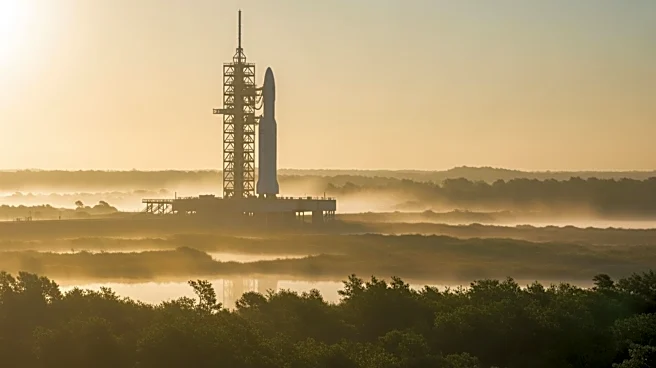
NASA's Kennedy Space Center, in collaboration with the U.S. Fish and Wildlife Service, has successfully integrated prescribed burns into its operations, even during active launch countdowns. This marks a significant shift in land management practices
at the spaceport, which is located within a large federal reserve. The prescribed burns, affecting approximately 2,600 acres of scrub habitat, are essential for maintaining the ecosystem, particularly for the federally protected Florida scrub-jay. Historically, launch operations were paused for such burns, but with an increasing launch cadence, NASA has adapted its approach to balance environmental stewardship with its mission objectives.
Why It's Important?
The integration of prescribed burns into NASA's operational schedule highlights the agency's commitment to environmental conservation while maintaining its space exploration goals. This approach ensures the protection of critical habitats and biodiversity, demonstrating a model for sustainable land management. The decision reflects the growing need for organizations to adapt to environmental challenges without compromising their core activities. It also underscores the importance of collaboration between federal agencies to achieve shared conservation and operational goals.
What's Next?
NASA and the U.S. Fish and Wildlife Service will likely continue refining their strategies to manage the spaceport's land and resources effectively. This may involve developing new technologies and methodologies to enhance the efficiency and safety of prescribed burns. As the launch cadence increases, ongoing assessment and adaptation will be crucial to ensure that environmental and operational objectives are met. The success of this initiative could influence other organizations facing similar challenges, promoting broader adoption of integrated environmental management practices.