

What's Happening?
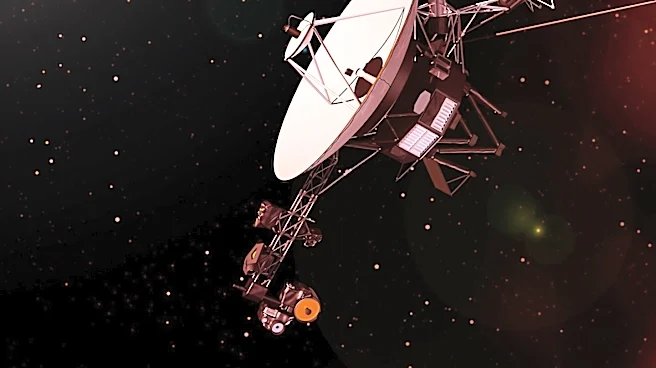
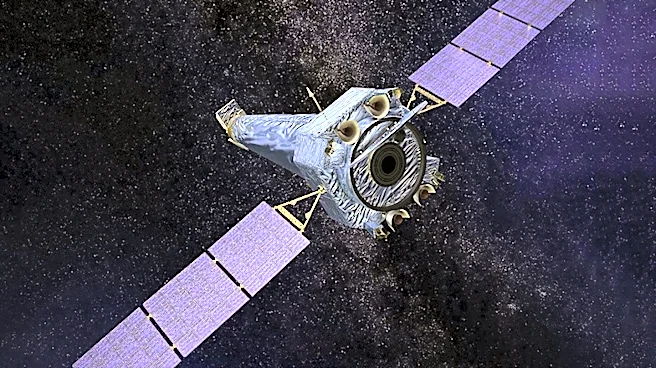
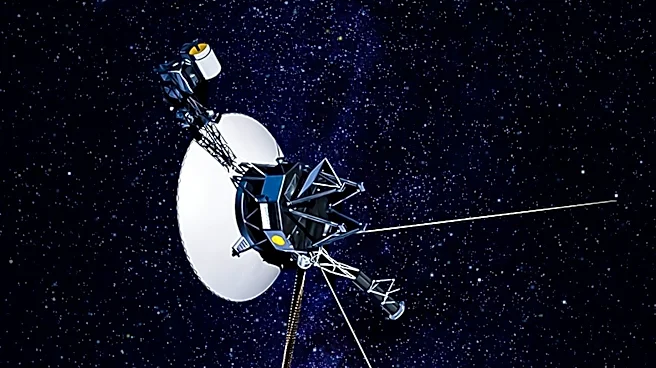
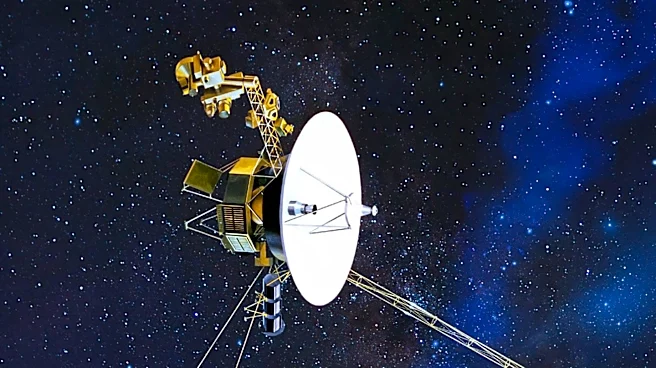
NASA has successfully executed a power-saving maneuver, dubbed the 'Big Bang,' on the Voyager 2 spacecraft, allowing it to continue operating its science instruments for at least another year. The maneuver involved swapping out higher-power components
for lower-power alternatives, ensuring the spacecraft remains operational in the cold environment beyond the heliosphere. This effort is crucial as Voyager 2, launched nearly 49 years ago, is one of the few spacecraft operating in interstellar space. Without this maneuver, Voyager 2 would have had to shut down one of its remaining instruments by the end of 2026.
Why It's Important?
The successful maneuver is significant as it extends the scientific capabilities of Voyager 2, which provides unique data from interstellar space. The mission's continuation is vital for understanding the outer reaches of the solar system and beyond. The maneuver also highlights the challenges of maintaining aging spacecraft and the innovative solutions required to extend their operational life. As the only in-situ sensor network in interstellar space, Voyager 2's data is irreplaceable, and its continued operation is a testament to NASA's engineering prowess.
What's Next?
NASA plans to perform a similar maneuver on Voyager 1, which is even farther from Earth. The success of this maneuver will depend on overcoming communication challenges due to the vast distance. Both Voyager spacecraft are expected to continue operating until the 2030s, with each power-saving fix extending their scientific window. The ongoing mission of the Voyager probes remains a critical component of NASA's exploration of the solar system's outer boundaries.