
What's Happening?
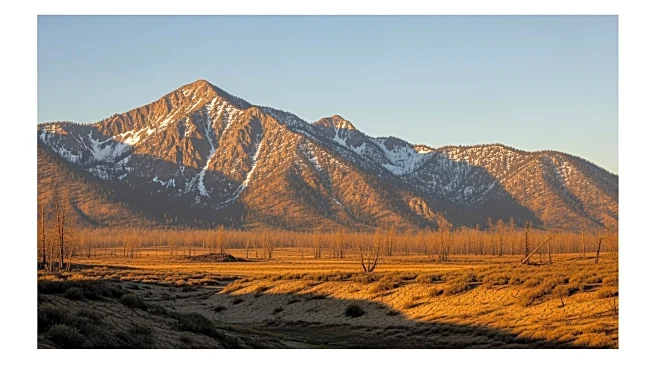
The Western United States is experiencing a significant 'snow drought' with snowpack levels hitting record lows across several states. This unusual weather pattern is attributed to uncommonly warm winter
temperatures, causing precipitation to fall as rain rather than snow. States like Colorado and Utah are reporting their lowest snowpack levels on record for this time of year. The lack of snowpack is concerning as it affects water supply, agricultural irrigation, and increases the risk of wildfires. The National Resources Conservation Service has noted that nearly all monitored basins in the Western U.S. are trending below average snowpack levels. Scientists are linking these conditions to climate change, which is altering temperature and precipitation patterns.
Why It's Important?
The low snowpack levels in the Western U.S. have significant implications for water resources, agriculture, and energy production. Snowpack serves as a natural reservoir, releasing water gradually as it melts, which is crucial for irrigation, drinking water, and hydropower generation. The current deficit could lead to water shortages, impacting farmers and increasing the risk of wildfires due to drier conditions. Additionally, the situation may exacerbate tensions among Western states over water rights, particularly concerning the Colorado River, which is already over-allocated. The ongoing drought conditions highlight the urgent need for sustainable water management and adaptation strategies in the face of climate change.
What's Next?
The National Oceanic and Atmospheric Administration predicts continued dry conditions and above-average temperatures for much of the Western U.S. in the coming weeks. This forecast suggests that relief from the snow drought is unlikely in the short term. The situation may prompt Western states to accelerate negotiations on water management agreements, particularly concerning the Colorado River. These discussions are critical to prevent further depletion of water resources and to ensure equitable distribution among states. The ongoing drought may also drive policy changes aimed at improving water conservation and management practices.
Beyond the Headlines
The snow drought in the Western U.S. underscores the broader impacts of climate change on regional weather patterns and natural resources. As temperatures rise and precipitation patterns shift, traditional water management strategies may become less effective, necessitating innovative approaches to resource conservation. The situation also highlights the interconnectedness of environmental, economic, and social systems, as water scarcity can lead to agricultural losses, increased energy costs, and heightened wildfire risks. Addressing these challenges will require coordinated efforts across multiple sectors and levels of government.