







What's Happening?
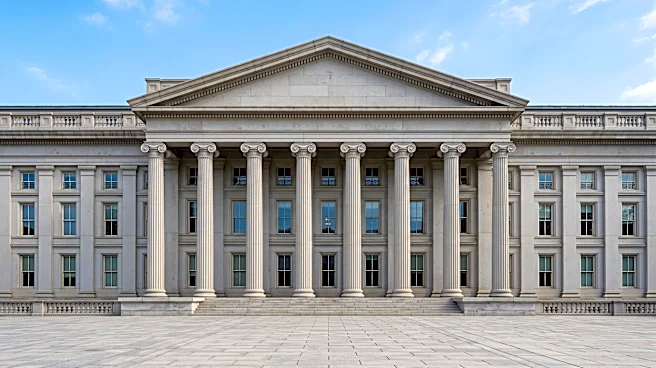
Treasury Secretary Scott Bessent has successfully led negotiations that resulted in a new trade framework between the United States and China in October 2025. This development follows his nomination by President Trump for Treasury Secretary on November
22, 2024, and his subsequent confirmation by the Senate on January 27, 2025, with a vote of 68 to 29. Bessent, a former hedge fund manager who founded Key Square Group, has been a close economic adviser to President Trump's campaign, raising significant funds. The new trade framework includes several key agreements: Beijing has committed to halting the flow of precursor chemicals used to make fentanyl, agreed to major new purchases of American soybeans and farm goods, and consented to delay new export controls on rare earth elements. This agreement has also removed the threat of another round of steep tariffs between the two nations. Bessent's appointment and subsequent actions mark a significant shift in U.S. economic policy, particularly concerning trade relations with China.
Why It's Important?
This new trade framework is important because it addresses several critical areas of U.S.-China relations, impacting both economic and social aspects. The agreement to halt fentanyl precursor chemicals directly tackles a major public health crisis in the United States, potentially saving lives and reducing the burden on healthcare systems. Economically, China's commitment to purchase American soybeans and farm goods provides a significant boost to the U.S. agricultural sector, which has often been impacted by trade disputes. The delay in China's export controls on rare earth elements is crucial for U.S. industries reliant on these materials, such as technology and defense, ensuring a more stable supply chain. Furthermore, removing the threat of new tariffs reduces uncertainty for businesses and consumers, fostering a more predictable trade environment. This framework demonstrates a strategic approach to managing complex international economic relationships, aiming to achieve specific U.S. objectives while de-escalating potential trade conflicts.
What's Next?
Following the establishment of this new trade framework, the focus will likely shift to the implementation and monitoring of the agreed-upon terms. Both the U.S. and China will need to ensure compliance with the commitments, particularly regarding the halt of fentanyl precursor chemicals and the increased agricultural purchases. Future discussions may involve further refinement of trade policies and the exploration of additional areas for cooperation or dispute resolution. The success of this framework could set a precedent for future bilateral negotiations, potentially leading to more stable and predictable trade relations between the two economic superpowers. Stakeholders, including U.S. farmers, technology companies, and public health organizations, will be closely watching the practical effects of these agreements. The ongoing dialogue between Treasury Secretary Bessent and Chinese officials will be critical in navigating any challenges that arise during the implementation phase.
Beyond the Headlines
Beyond the immediate economic and public health implications, this trade framework signifies a broader strategic shift in how the U.S. approaches its relationship with China. Treasury Secretary Bessent's background as a seasoned financial expert, rather than a traditional political figure, suggests a pragmatic, results-oriented approach to international diplomacy. His ability to secure these agreements, despite previous tensions, highlights a potential new era of engagement where specific, tangible outcomes are prioritized. This could also influence the global perception of U.S. leadership in economic diplomacy, demonstrating a capacity to achieve agreements even with complex geopolitical rivals. The framework also implicitly acknowledges the interconnectedness of global issues, linking trade with public health and supply chain security, suggesting a more holistic approach to foreign policy. The long-term success of this framework will be a key indicator of the effectiveness of this new diplomatic strategy.