






What's Happening?
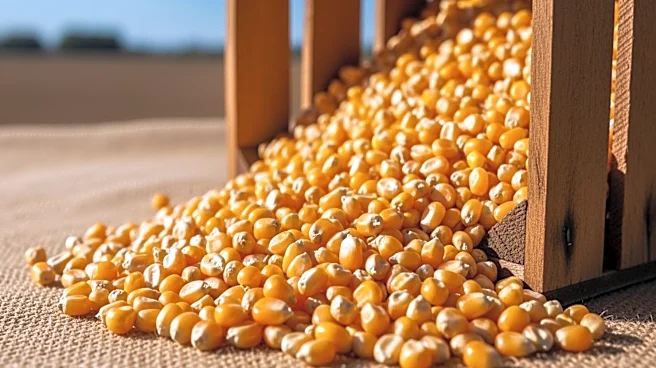
The Ukrainian Grains Association (UGA) has projected a significant increase in corn exports for the 2026/27 season. According to UGA President Nikolay Gorbachov, the corn crop in Ukraine is expected to rise to 32.6 million metric tons, up from 31.3 million metric tons in the previous
season. Consequently, corn exports are anticipated to increase to 26 million tons from 22 million tons. Gorbachov shared these insights during his presentation at the GrainCom Conference in Geneva. Additionally, he forecasted a wheat harvest of between 22 and 23 million tons, with wheat exports potentially increasing to 16 million tons from the current season's 13.5 million tons. Despite current slow export rates, Gorbachov noted that this would lead to increased stockpiles, which could be carried over to support future exports.
Why It's Important?
The projected increase in Ukrainian corn exports is significant for global agricultural markets, particularly for countries reliant on grain imports. As one of the world's largest cereal exporters, Ukraine's ability to boost its export capacity can help stabilize global grain prices and supply chains. This development is crucial for countries facing food security challenges, as increased availability of Ukrainian corn and wheat could alleviate some of the pressures caused by supply disruptions. Additionally, the increase in exports could bolster Ukraine's economy by enhancing its trade balance and providing a steady revenue stream from agricultural exports.
What's Next?
As Ukraine prepares for the 2026/27 season, stakeholders in the global grain market will likely monitor the country's export activities closely. The anticipated increase in exports may prompt adjustments in trade policies and agreements with importing countries. Additionally, Ukrainian farmers and exporters may need to enhance their logistics and infrastructure to handle the increased volume efficiently. The international community, particularly countries dependent on Ukrainian grain, will be keen to see how these projections materialize and impact global food supply chains.