






What's Happening?
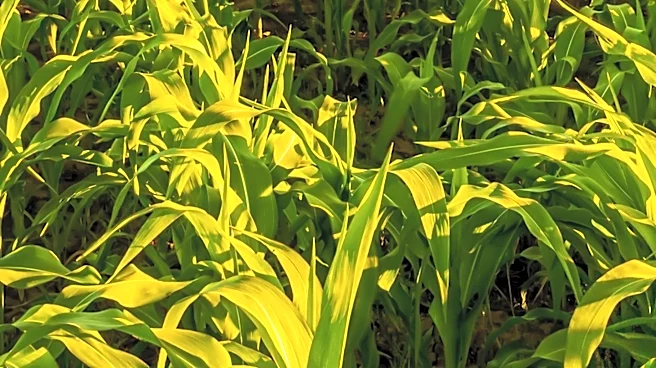
Inconsistent summer weather patterns in Iowa have limited the widespread impact of several corn diseases, including tar spot, northern corn leaf blight, gray leaf spot, and bacterial leaf streak. According to Rebecca Vittetoe, an extension agronomist
with Iowa State University, while these diseases are present, the fluctuating weather conditions have prevented any single disease from becoming overly prevalent. Vittetoe noted that tar spot is expected to become more common as the season progresses and temperatures cool. However, the stage of corn development is a critical factor; diseases appearing later in the R stages, particularly by R6, will have less impact on yield compared to earlier appearances during the grain fill period. This variability in weather has, in some ways, played in farmers' favor by preventing a severe outbreak of any one disease.
Why It's Important?
The limited impact of corn diseases due to inconsistent weather is significant for U.S. agriculture, particularly for corn-producing states like Iowa. Corn is a staple crop, and widespread disease outbreaks can lead to substantial yield losses, impacting farmers' livelihoods and potentially affecting national food supply chains and commodity prices. While the current weather patterns have offered some reprieve, the expectation that tar spot will become more prevalent as temperatures cool highlights the ongoing threat. Farmers must remain vigilant and scout their fields, especially ahead of harvest, to identify areas with high disease pressure. This proactive approach is crucial for managing potential stalk quality and standability concerns, which can further reduce harvestable yield and increase operational costs. The situation underscores the delicate balance between environmental factors and agricultural productivity.
What's Next?
As the season advances and temperatures begin to cool, agricultural experts anticipate an increase in the prevalence of tar spot in cornfields. Farmers are advised to prioritize scouting their fields ahead of harvest to identify areas with significant disease pressure. This will allow them to make informed decisions regarding harvest timing and management strategies to mitigate potential losses from stalk quality and standability issues. The impact of these diseases will largely depend on the specific stage of corn development when they become more widespread. Diseases appearing later in the R stages are expected to have a lesser effect on overall yield compared to earlier infections. Continuous monitoring and timely intervention will be crucial for minimizing the economic impact on corn producers.
Beyond the Headlines
The fluctuating weather patterns and their influence on corn diseases underscore the broader challenges faced by U.S. agriculture in the context of climate variability. While inconsistent weather has temporarily limited disease impact, it also introduces unpredictability, making long-term agricultural planning more complex. The need for constant scouting and adaptive management strategies highlights a shift towards more resilient farming practices. This situation could accelerate research into disease-resistant corn varieties and advanced forecasting models to better predict disease outbreaks. Furthermore, it emphasizes the importance of agricultural extension services, like those provided by Iowa State University, in disseminating real-time information and guidance to farmers, ensuring they have the tools to respond effectively to evolving environmental threats and maintain food security.