




What's Happening?
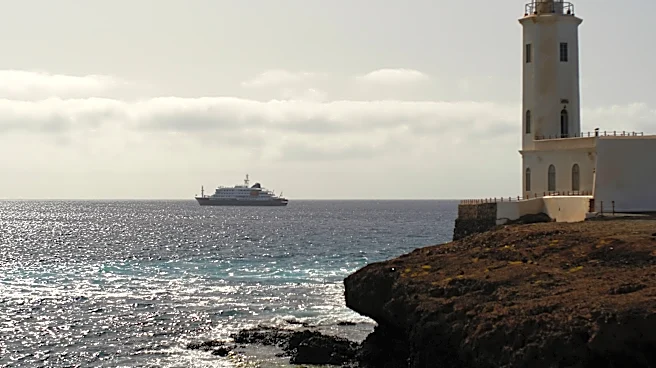
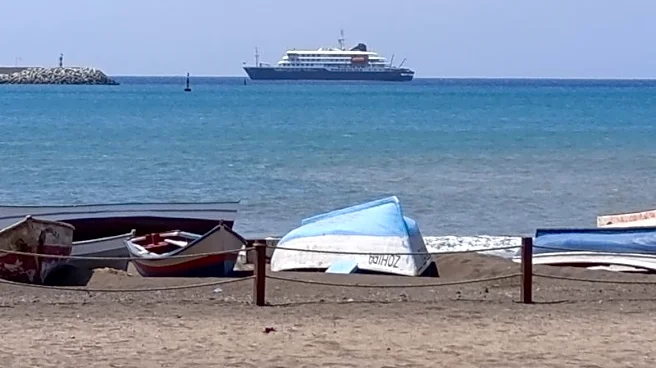
The World Health Organization (WHO) has reported an outbreak of hantavirus on a luxury cruise ship, the MV Hondius, which is currently marooned off the coast of Cape Verde. The outbreak has resulted in seven cases, including three deaths. The ship, carrying
mostly British, American, and Spanish passengers, was on an Antarctic nature expedition. The first victim, a Dutch man, died on April 11, and his body was disembarked on St Helena. His wife also fell ill and died shortly after. A British passenger was medically evacuated to South Africa and tested positive for hantavirus. The ship has been refused permission to dock, leaving about 150 people stranded onboard.
Why It's Important?
The hantavirus outbreak on the MV Hondius highlights the vulnerabilities of cruise ships to infectious diseases, reminiscent of challenges faced during the COVID-19 pandemic. The situation underscores the need for stringent health protocols and rapid response measures in the cruise industry to prevent the spread of infectious diseases. The outbreak poses significant health risks to passengers and crew, and the refusal to allow the ship to dock complicates efforts to provide medical care and containment. This incident may impact the cruise industry's recovery efforts post-pandemic, as potential travelers may be deterred by health concerns.
What's Next?
The MV Hondius is considering sailing to Las Palmas or Tenerife for medical evacuation and passenger screening, as Cape Verdean authorities have not granted docking permission. Health authorities are working to evacuate critically ill passengers and determine the source of the outbreak. The situation requires coordinated international efforts to ensure the safety of those onboard and prevent further spread. The cruise industry may face increased scrutiny and pressure to enhance health and safety measures to regain public trust.