







What's Happening?
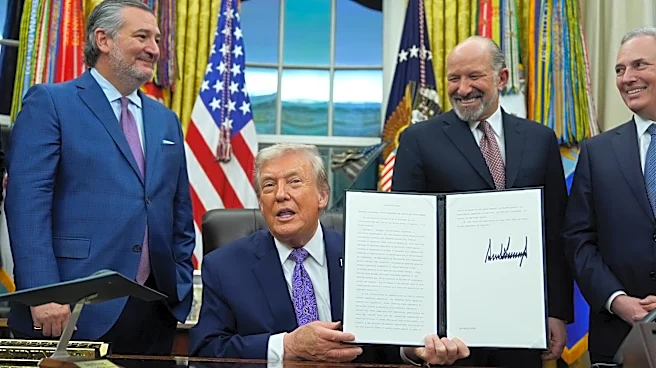
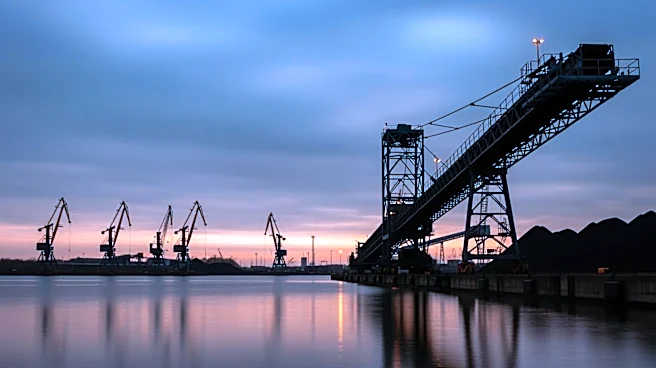
The Trump administration has announced plans to invest $75 million in a coal export terminal at the port of Oakland, California. This decision is part of a broader initiative to allocate $700 million to coal projects across the United States. The proposed
terminal has sparked significant opposition from local residents and environmental groups, who have been fighting against the project for over a decade. The site, previously a military base, was purchased by developer Phil Tagami, who initially had no plans to ship coal. However, in 2015, he pivoted to coal exports following a deal with the state of Utah. Despite a citywide ban on coal handling and storage, legal battles have allowed the project to persist. Local activists, including the No Coal in Oakland coalition, are mobilizing to prevent the terminal's construction, citing environmental and health concerns for the already pollution-burdened community of West Oakland.
Why It's Important?
The proposed coal terminal in Oakland highlights a significant clash between federal and local priorities, particularly in a state like California that has been at the forefront of environmental regulation. The project is seen as a step backward in efforts to reduce fossil fuel dependency and combat climate change. For the residents of West Oakland, the terminal represents a potential increase in pollution and health risks, exacerbating existing environmental injustices. The use of the Defense Production Act to push the project forward has been criticized as an overreach of federal power, undermining local governance and community efforts to protect public health. The outcome of this conflict could set a precedent for future federal interventions in local environmental matters.
What's Next?
Local opposition groups are planning to intensify their efforts to block the coal terminal's construction. Community meetings are scheduled to strategize and rally support, with a focus on influencing state and local regulatory bodies to impose stricter air quality regulations. The project still requires numerous permits, providing opportunities for public input and legal challenges. Additionally, the financial viability of the terminal is in question, as the $75 million federal investment covers only a fraction of the estimated $400 million cost. Activists aim to deter potential investors by highlighting the strong community resistance and potential legal hurdles.