


What's Happening?
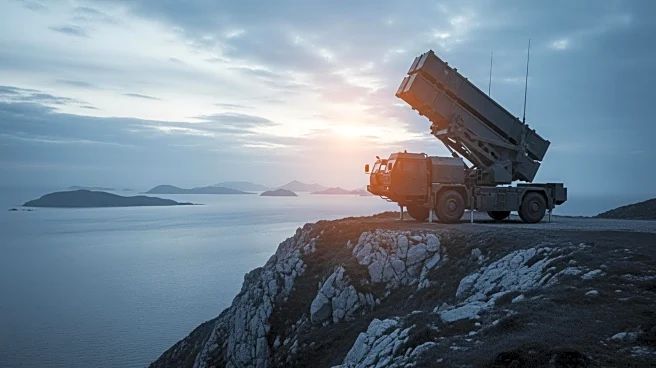
The United States plans to increase its deployment of advanced missile systems to the Philippines, a move aimed at deterring aggression in the South China Sea. This decision comes as both nations condemned China's 'illegal, coercive, aggressive, and deceptive
activities' in the region. The U.S. has already installed a mid-range missile system called the Typhon in the northern Philippines and an anti-ship missile launcher last year. Despite China's objections, the Philippines, led by President Ferdinand Marcos Jr., has refused to remove these systems. The U.S. and the Philippines are also planning joint military exercises and efforts to modernize the Philippine military. The deployment of these systems is intended to preserve freedom of navigation and overflight in the region.
Why It's Important?
The deployment of U.S. missile systems in the Philippines is significant as it underscores the strategic military alliance between the two countries amidst rising tensions with China. This move is likely to impact regional stability and could escalate military confrontations in the South China Sea, a critical trade and military route. The U.S. aims to deter Chinese aggression, which has been a growing concern for neighboring countries involved in territorial disputes with China. The increased military presence may also influence the balance of power in the Indo-Pacific region, affecting international trade and security dynamics.
What's Next?
The U.S. and the Philippines are expected to continue their military collaboration, with potential future deployments of upgraded missile systems. This could lead to further diplomatic tensions with China, which may respond with increased military activities or diplomatic protests. The situation will likely be closely monitored by other regional players and international stakeholders, as any escalation could have broader implications for global security and economic stability.