



What's Happening?
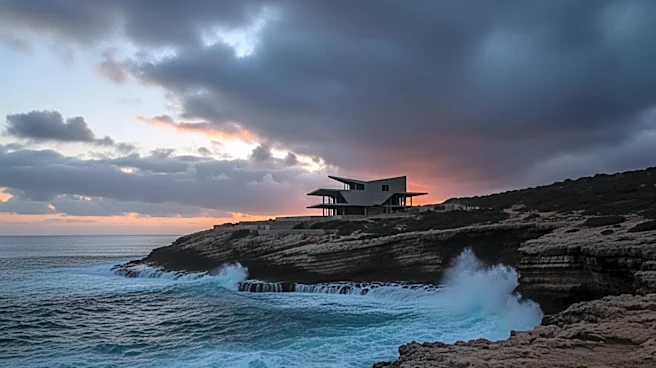
A major coastal development project in Albania, linked to Jared Kushner, son-in-law of President Trump, is facing increasing opposition from protesters. The project, located on the Adriatic coast, aims to transform the area into a high-end tourism destination,
which the Albanian government believes will aid its European Union membership aspirations. However, environmental campaigners and critics of Prime Minister Edi Rama are opposing the venture, which includes a development in the Narta Lagoon wildlife reserve and a resort on the uninhabited island of Sazan. The project, associated with Kushner and Ivanka Trump, has sparked public anger, especially after a video showed an activist being dragged by a private security guard during a protest. Environmental groups have condemned the destruction of protected habitats, and Albania's state anti-corruption agency has opened an investigation into the project.
Why It's Important?
The development project in Albania highlights the tension between economic growth and environmental conservation. While the Albanian government sees the project as a means to boost tourism and align with EU standards, environmentalists argue it threatens biodiversity and protected areas. The involvement of Kushner and Ivanka Trump adds a layer of international scrutiny, potentially affecting diplomatic relations and public perception of U.S. influence in foreign investments. The protests and legal challenges could impact Albania's tourism strategy and its efforts to attract foreign investment, while also raising questions about the ethical implications of developing protected natural areas.
What's Next?
The ongoing protests and the investigation by Albania's anti-corruption agency could lead to delays or modifications in the development plans. Prime Minister Rama's commitment to the project suggests continued government support, but public pressure and environmental concerns may force reconsideration of certain aspects. The situation could also influence future foreign investments in Albania, as investors weigh the risks of public opposition and legal challenges. Additionally, the project's fate may serve as a precedent for similar developments in the region, affecting policy decisions and environmental regulations.