



What's Happening?
European regulators have issued an Emergency Airworthiness Directive grounding specific Airbus A319, A320, and A321 aircraft following an incident involving a JetBlue flight. The directive was prompted by a malfunction in the Elevator Aileron Computer
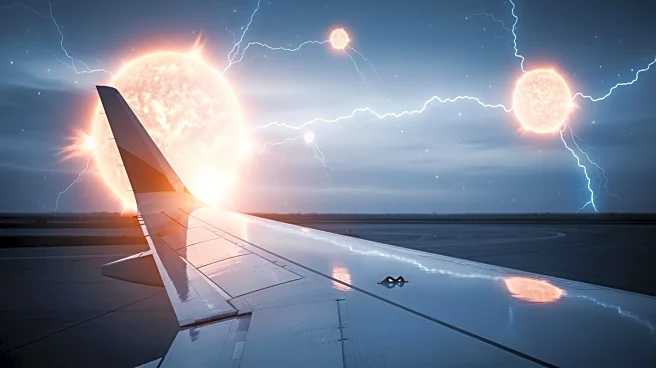
(ELAC), which Airbus attributed to intense solar radiation. This malfunction led to an 'uncommanded and limited pitch down' during a JetBlue flight from Cancun to New Jersey, resulting in passenger injuries. Airbus has advised operators to replace affected ELAC units with older versions, and most of the fleet has already undergone these modifications. The incident highlights the vulnerability of aircraft electronics to high-energy radiation particles, which can cause 'single-event upsets' or bit flips, particularly at aviation altitudes where atmospheric shielding is reduced.
Why It's Important?
The grounding of thousands of Airbus planes underscores the broader susceptibility of modern infrastructure to space weather, particularly during the current solar maximum. The incident raises concerns about the reliability of critical systems in aviation, as well as other sectors reliant on microchips and satellites. The potential for solar radiation to disrupt electronics poses risks not only to aviation safety but also to telecommunications and power grids. This event highlights the need for robust mitigation strategies to protect against space weather-induced glitches, which can have significant economic and safety implications.
What's Next?
Further investigation is required to determine the exact cause of the JetBlue incident, whether it was due to solar radiation, cosmic rays, or another factor. Airbus is working to ensure all affected aircraft are modified and returned to service. The aviation industry may need to reassess and enhance its strategies for mitigating the effects of space weather on aircraft electronics. Additionally, ongoing monitoring of solar activity and its impact on technology will be crucial to prevent similar incidents in the future.
Beyond the Headlines
The incident with Airbus planes highlights a growing challenge as technology becomes more integrated into critical infrastructure. The reliance on microchips and satellites makes systems more vulnerable to space weather, necessitating advancements in radiation-hardened technology and software redundancy. This event may prompt a reevaluation of current safety protocols and encourage investment in research to better understand and mitigate the effects of space weather on modern technology.